
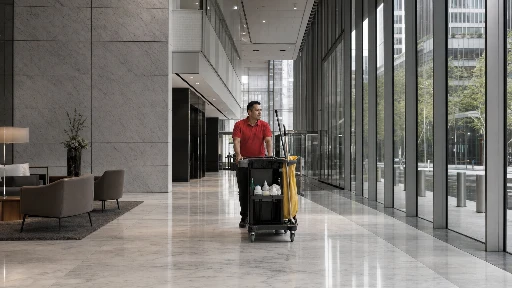
Most Los Angeles office buildings run a single commercial cleaning schedule across every area, every night, regardless of how much traffic those areas actually see. That approach misses the mark on both ends: high-traffic lobbies and restrooms fall behind by midday, while private offices and archive rooms get cleaned just as often as the front entrance. According to the International Sanitary Supply Association (ISSA), the cost of maintaining a clean workplace is roughly three times lower than the productivity and absenteeism costs of an unclean one. Choosing the right cleaning frequency, by zone and use type, is where that math starts to work in your favor.
The right commercial cleaning service for your building isn't a flat rate applied uniformly. Professional cleaning companies serving commercial properties throughout Los Angeles increasingly use zone-based models that match cleaning service frequency to actual foot traffic patterns. That shift separates buildings where tenants notice the difference from buildings where cleaners show up every night and nothing looks any better by Friday afternoon.
Why One Commercial Cleaning Schedule Doesn't Work for Every Building
A building lobby processing 500 employees and visitors daily doesn't have the same soil load as a private office suite that stays locked until Thursday. Treating them with identical frequency is how you end up with spotless exec conference rooms while the lobby trash overflows before lunch.
Zoning is the foundation of an effective commercial office cleaning program. Every Los Angeles office building can be broken into high-traffic, medium-traffic, and low-traffic zones, each with a frequency that matches the actual use pattern. Your janitorial vendor should walk the building, map the zones, and propose a frequency matrix, not hand you a flat rate for nightly cleaning service across every square foot.
High-Touch Surfaces Are the Exception to Zone Rules
Regardless of which zone they're in, high-touch surfaces need more frequent attention. The CDC's environmental surface cleaning guidance identifies elevator buttons, door handles, reception counters, shared restrooms, break room equipment, and copy room controls as surfaces that accumulate microbial load throughout the day.
For Class A office buildings in Los Angeles, a day porter running high-touch disinfection every two to three hours is standard practice. MNZ Commercial Cleaning Services has supported Class A buildings with day porter programs throughout Los Angeles since 1979, and buildings with that midday coverage see fewer tenant complaints and lower sick-day rates than comparable buildings relying on nightly office cleaning alone.
Zone-Based Office Cleaning Frequency for LA Commercial Properties
Here's a practical breakdown that works for most commercial office properties in the greater Los Angeles area. You'll adjust based on your specific occupancy count, tenant mix, and lease obligations.
Zone 1: Daily, or Multiple Times Daily
These are your highest-traffic, fastest-accumulating areas
Daily cleanings for Zone 1 cover trash removal, mopping or vacuuming, high-touch surface disinfection, and restroom restocking. For buildings with 200 or more daily occupants, a midday porter pass for restrooms and common areas is a minimum, not a luxury.
Zone 2: Three to Five Cleanings Per Week
These spaces see consistent daily use but don't accumulate soil as quickly as Zone 1:
A Monday, Wednesday, and Friday commercial cleaning service pass handles most open-office environments adequately. Buildings running 24-hour operations, or those with heavy hotdesking turnover, typically step up to five days per week for these zones.
Zone 3: Weekly or Bi-Weekly
These areas generate low soil load and don't see high contact rates:
Weekly professional cleaning keeps these spaces tidy without burning janitorial labor hours on areas that barely get used. Bi-weekly works for archive and storage rooms with no regular occupancy.
Zone 4: Monthly or Quarterly, Including Window Cleaning
These are periodic tasks that require scheduling but happen far less frequently:
These periodic services often get left out of base janitorial contracts and then surface as unfunded surprises. Building them into your cleaning scope of work from the start prevents the annual disagreement about who's responsible for what. Many commercial cleaning companies also offer one-time deep cleaning packages that cover Zone 4 tasks when a building is transitioning vendors or preparing for a major tenant move-in.
Pro tip: Ask your janitorial vendor to map your building into zones and attach a cleaning frequency checklist to the contract. A one-page table listing each zone with its daily, weekly, monthly, and quarterly tasks makes it easy to audit service delivery, catch shortfalls early, and hold your cleaning service accountable throughout the contract term.
What Shapes Office Cleaning Service Frequency Beyond Foot Traffic?
Foot traffic is the primary factor, but four other variables consistently affect the right cleaning cadence for a commercial office in the Los Angeles area.
Tenant Type and Industry
A law firm with 20 attorneys and no public walk-in traffic runs a fundamentally different soil load than a medical office handling patient appointments from 8 a.m. to 6 p.m. Creative agencies tend to run later hours and generate heavier kitchen use. Financial services tenants often require evening cleaning service after market close. Understanding your tenant mix before setting frequencies prevents under-servicing the busiest spaces and over-servicing quiet ones. Professional commercial cleaning vendors who specialize in multi-tenant office buildings know these patterns by industry type.
Lease Terms and Tenant Expectations
Class A office leases in Los Angeles frequently specify cleaning scope and minimum frequency as part of the landlord's service obligations. Tenants paying Class A rents have expectations that match the premium, and falling below them is a lease renewal problem. If you're managing a multi-tenant portfolio, pull the cleaning provisions from each lease before finalizing the building service standard.
Green Cleaning Certification and Compliance Requirements
LEED-certified buildings often require green cleaning protocols specifying product types, dilution ratios, and ventilation requirements during cleaning, not just frequency. OSHA's General Industry sanitation standards set minimum requirements for restroom access and condition in facilities with employees. Knowing which standards apply to your building lets you build a defensible frequency schedule if questions come up during a facilities audit or inspection.
A professional commercial cleaning company with green cleaning certification can build a compliant program from the ground up, ensuring your frequency schedule satisfies both lease obligations and regulatory requirements.
The Building Service Contractors Association International (BSCAI) notes that labor accounts for 50 to 65 percent of a cleaning company's operating costs. A vendor bidding significantly below competitors on a comparable scope hasn't found an efficiency advantage: they've reduced frequency, staffing hours, or both.
Seasonal and Weather Pressures
Los Angeles doesn't have harsh winters, but wildfire season creates real cleaning pressure across business districts throughout the city. During active smoke events, particulate accumulation at building entries, lobbies, and HVAC intake zones increases sharply. During the 2025 and 2026 LA wildfire events, many commercial properties saw lobby and entry cleaning frequency increase by 30 to 50 percent on red-flag days to keep particulate from tracking through the building. Building in a contingency provision, with a defined trigger and a pre-agreed rate, saves the back-and-forth when the next fire season hits.
Office Janitorial Services Checklist: Commercial Cleaning Scope of Work
Once you've mapped your zones and set frequencies, the next step is building them into a formal office janitorial services checklist for bidding or vendor review. A vague scope produces vague bids that are impossible to compare. Professional commercial cleaning service providers expect a detailed scope, and the ones worth hiring will push back if you don't provide one.
An effective checklist lists each building area with its approximate square footage, cleaning frequency per week, and the specific tasks included at each frequency, such as vacuuming, mopping, restroom restocking, high-touch disinfection, trash removal, and glass cleaning. When bids come back, the comparison is apples to apples. A cleaning company priced dramatically lower than competitors has almost always cut something from the frequency or task list, and the gap is visible when you've got a detailed scope.
Standard items for a commercial office cleaning checklist include:
At MNZ, every new building engagement starts with a walkthrough that produces a zone map and frequency matrix before any pricing is discussed. That document becomes the foundation of the cleaning agreement and the benchmark for ongoing quality verification. MNZ's commercial cleaning service area covers Class A office towers, multi-tenant buildings, and creative campuses throughout Los Angeles. If you'd like to schedule a complimentary walkthrough and scope review for your Los Angeles commercial building, contact the MNZ team here. We've been building cleaning programs for commercial properties throughout the city since 1979.
FAQ
How often should a commercial restroom be cleaned in a Los Angeles office building?
For a building with 50 or more occupants, daily restroom cleaning is the minimum. High-traffic restrooms serving 200 or more daily users typically need two full cleaning passes per day, plus a porter check every two to three hours for restocking and spot cleaning. OSHA's sanitation standards require employers to provide accessible, properly maintained restrooms during all work hours, so the minimum standard isn't optional. It's a compliance floor, not a target.
How often should commercial carpet be cleaned in an LA office?
The ISSA recommends commercial carpet hot-water extraction every three to six months depending on foot traffic. High-traffic zones like lobbies, main corridors, and shared conference rooms typically need quarterly extraction. Private office carpet can often hold up to a six-month interval between deep cleans. Most commercial cleaning programs add interim dry-compound or encapsulation cleaning between extractions to maintain appearance and extend carpet life.
What's the difference between nightly janitorial and a day porter?
Nightly janitorial service happens after hours, typically once the building is fully vacated, and handles the full cleaning scope: trash removal, vacuuming, mopping, restroom deep clean, and disinfection. A day porter works during business hours and focuses on real-time maintenance tasks: restroom restocking and spot cleaning, lobby tidying, spill response, and common area resets. Most Class A buildings in Los Angeles use both, since nightly cleaning service alone can't maintain a lobby or restroom through a full business day.
Can we reduce cleaning frequency temporarily without damaging the building?
Yes, but target Zone 3 and Zone 4 areas, not Zone 1. Cutting lobby, restroom, or break room frequency generates tenant complaints faster than it saves money on service costs. A smarter approach is to reduce the periodic and specialty tasks, such as quarterly carpet extraction or scheduled interior window cleaning, temporarily while keeping daily Zone 1 service intact. You preserve the spaces tenants interact with every day while reducing spend on lower-priority items.
The right cleaning frequency for your Los Angeles office building isn't a number you find in a manual. It's a property-specific calculation based on your zones, your tenants, your lease obligations, and your seasonal exposure. MNZ Commercial Cleaning Services has been building those programs for commercial properties throughout Los Angeles since 1979. If your current cleaning schedule feels like a guess, let's walk your building and build a frequency plan that actually matches how it's used.
Related Reading
What Should an Office Cleaning Schedule Include for Los Angeles Commercial Buildings?
What Should a Commercial Cleaning SLA Include to Hold Your Vendor Accountable?
Transform your space into a clean and welcoming environment with MNZ. Contact us today to schedule a consultation and get a quote for our professional cleaning and maintenance services.
.jpg)


