
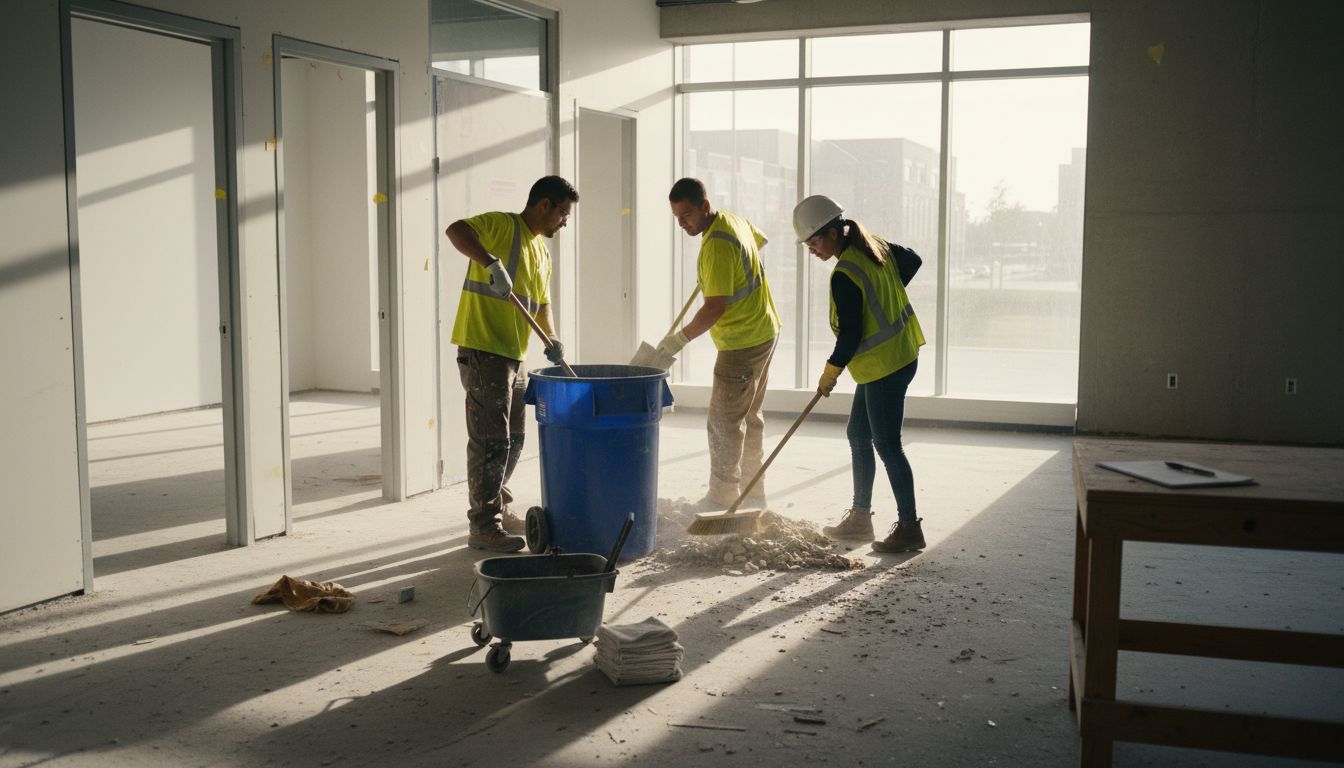
You just finished a big building project. The contractors have put away their tools, the walls have been painted again, and the whole area looks a little messy. There is dust on every surface, trash in the corners, and that new space doesn't seem ready for your tenants or employees yet.
Does this sound familiar?
The truth is that even the best-planned construction project can fail if it isn't cleaned up properly. If you manage more than one property in Los Angeles County, you already know that quick or incomplete cleanups can make it take longer for people to move in, cause compliance problems, and give you headaches you don't need.
The good news is that A good construction cleanup checklist turns what seems like a mess into a process that is easy to follow and manageable. After helping hundreds of property managers and building owners in West Hollywood, Santa Monica, El Segundo, and Pasadena, we've figured out the seven steps that really work.
Why Construction Cleanup Needs More Than a Quick Sweep
On average, construction sites produce 4.5 pounds of trash for every square foot of building space. It's not just empty coffee cups and dust bunnies. We're talking about tiny particles that get into HVAC systems, glue that ruins finished surfaces, and trash that can be dangerous.
Dust from construction can make your lungs hurt and make your allergies worse, so cleaning up isn't just about how things look. It's about making a safe, useful space where your tenants can do well.
As of 2024, the global commercial cleaning industry is worth $415.93 billion. Commercial spending on cleaning services is expected to stay on top, thanks to a growing focus on improving indoor air quality. Property managers are becoming more aware that hiring professional commercial cleaning services isn't just a nice thing to have; it's necessary to protect your investment and keep the value of your property.
Step 1: Walk through before cleaning
You need to know exactly what you're dealing with before anyone picks up a broom. It's not enough to just look at the space and say it's right.
Look at each room with a critical eye. Write down the parts that need extra care. Are there paint drips on the windows? Is there construction glue on the floors? Dust building up in light fixtures that your regular cleaning staff might not see?
During this first check, look for bulbs that are covered in dust and other small tasks that are easy to forget. Put everything down on paper. Snap some pictures. This paperwork serves several purposes: it holds people accountable, helps you figure out how much work needs to be done, and gives you a starting point for your final inspection.
This walk-through should also include checking the HVAC vents and filters in commercial buildings in Los Angeles. Because of the weather in Southern California, these systems run all year long. Dust from construction loves to settle in ductwork, where it can stay for months if not cleaned.
Step 2: Get rid of big trash and dangerous things first
Always start your cleanup list with the big things. Before you start dusting or mopping, please pick up the bigger pieces of trash and construction materials by hand.
In other words,
- Getting pieces of wood, drywall, and tile that are left over
- Following Los Angeles County rules for getting rid of building materials the right way
- Taking off cardboard boxes, packaging materials, and protective coverings
- Finding and safely dealing with any dangerous materials, such as paint residue or chemical cleaners
If you want to work with commercial cleaning services, make sure they know the rules in your area. Professional cleaners know how to handle certain materials and have built relationships with the right places to throw them away.
Step 3: Clean all surfaces from top to bottom very well
This is the part that makes the difference between a good cleanup and a bad one. You need to clean every surface, so you'll have to start at the ceiling and work your way down.
Start by cleaning the ceilings and lights. Surprisingly, construction dust is light and goes up, where it settles on crown molding, light covers, and ceiling fans. If you skip these areas and start with the floors, you'll just move the dust around as it falls.
Next, go to the walls. Construction dust settles on everything, even the walls, so you'll need to wipe down every wall from top to bottom. Pay close attention to corners and baseboards, where dirt and debris tend to build up.
This step should include the following for commercial properties:
- Cleaning the frames and sills of all the windows
- Cleaning the handles and frames of doors
- Getting rid of any paint splatters or sticky residue
- Cleaning the air vents and return grills
- Cleaning and dusting all of the ceiling fans and light fixtures
For each surface, use the right cleaning products. Using the wrong cleaner on luxury vinyl tile can void warranties or damage finishes. What works on sealed concrete won't work on luxury vinyl tile.
Step 4: Take care of glass, windows, and other reflective surfaces
Windows get the most damage from construction work. Paint overspray, glue residue, protective film glue, and dust buildup can all make clean glass look cloudy.
When cleaning up after construction, professional commercial cleaning services use special methods on glass. This usually means:
- Using the right tools to scrape off paint and glue without scratching the glass
- Using special solvents to get rid of tough stains
- Cleaning the glass on both sides
- Cleaning the tracks and frames of windows where dirt builds up
- Last touch-up with solutions that don't leave streaks
Please remember mirrors, glass doors, and any other surfaces that reflect light. These are the main points in most businesses, and streaky or dirty glass makes it look like the whole property hasn't been taken care of.
Step 5: Clean and disinfect all the floors
Depending on the type of flooring you have, cleaning the floors after construction will require different methods. Polished concrete can hurt hardwood, and cleaning carpets is very different from cleaning tile.
For hard surfaces, you usually need to:
- Use a vacuum or a broom to get rid of loose dirt and debris.
- Use the right cleaning solutions for the type of flooring you have when you mop.
- Fix any paint drips, glue residue, or scuff marks.
- If needed, put down floor finish.
- To make it shine again, buff or polish it.
If you have a lot of square footage, you might want to think about buying or renting a commercial floor scrubber to clean big areas more quickly. These machines make cleaning a lot faster and get better results than mopping by hand.
Step 6: Clean the kitchens, bathrooms, and utility areas very well
These areas that get a lot of use and touch should be at the top of your construction cleanup list. If these areas aren't clean, tenants and employees will notice right away.
For break rooms and kitchens in businesses:
- Clean the insides and outsides of all the drawers and cabinets.
- Clean the backsplashes and countertops
- Polish and clean all of the hardware and fixtures.
- Clean the outside and inside of appliances
- Make sure that all of the plumbing fixtures are clean and work properly.
For the bathroom:
- Clean the toilets, urinals, and partitions very well.
- Polish and clean all the fixtures.
- Get rid of any haze from the grout on the new tile work.
- Wipe down and disinfect all sinks and counters.
- Check that all fixtures work properly
Step 7: Last Check and Touch-Up
The final inspection is the last step in your construction cleanup checklist. This person shouldn't be the same one who cleaned.
The following should be part of a proper final inspection:
- Looking at each room again with new eyes
- Checking all the light switches and fixtures
- Running water through all of the fixtures to make sure they drain properly
- Making sure that all surfaces are really clean and ready to use
- Writing down any problems that still need to be fixed
The commercial cleaning industry has grown a lot, and 57% of businesses expect their sales to go up as property managers realize how useful professional services are. This growth shows that people know that a thorough cleaning isn't just about looks; it also affects how happy tenants are and how well the property works.
You might want to think about using a digital checklist that everyone on the team can sign off on. This makes sure that everyone is responsible and that nothing is forgotten in the last stages.
The Actual Price of Skipping Steps
Let's talk about what happens when property managers try to save money on cleaning up after construction.
First, you might have to wait longer to move in. A space that isn't really ready is the quickest way to throw off a leasing schedule. Customers have every right to refuse to move in if the space isn't clean and safe, and you still have to pay rent or face penalties.
Second, not cleaning up well can lead to problems with maintenance that last a long time. HVAC systems that get construction dust in them keep circulating it for months, which can cause complaints about air quality and costly repairs.
Third, not cleaning up well hurts your reputation. Word gets around quickly among business tenants, and no one wants to rent from a landlord who is known for cutting corners.
The average cost of cleaning up after construction is about $475 for homes, but it goes up from there for businesses. But professional cleaning services often cost less than the hidden costs of not cleaning up completely, depending on how big the area is and how much work needs to be done.
Why Los Angeles properties should hire commercial cleaning services
It can be hard to manage properties in Los Angeles County. You're working on a lot of different projects, dealing with contractors who have their own schedules, and trying to keep vacancy periods to a minimum.
There are several benefits to hiring a professional commercial cleaning service:
Tools and knowledge: They have heavy-duty tools that make cleaning large areas quick and easy, as well as special tools for getting rid of construction debris without harming surfaces.
Trained staff: Professional cleaners know the difference between cleaning up after construction and cleaning up on a regular basis. They know which products work on different types of surfaces and how to solve problems that come up during construction.
Efficiency: A specialized team can often finish jobs in just a few hours that would take your maintenance team several days.
Knowledge of compliance: Professional services know the rules in their area and can keep records of their work to show that they are following them.
Flexibility: They can change the size of their crew to fit your schedule, whether you need a space ready in 24 hours or you have a more relaxed schedule.
Changes in the market that will affect construction cleanup in 2026
The business of cleaning is changing quickly. These are trends that have a direct effect on how construction cleanup is done:
More attention is being paid to the quality of the air inside: Property managers can't ignore dust and other small particles anymore. Tenants want clean air, and that starts with a thorough cleanup after the building is finished.
California has the strictest environmental laws in the country, and more and more commercial cleaning services are using green cleaning products that meet those laws without losing effectiveness.
Technology integration: Some commercial cleaning services now use digital checklists, photo documentation, and real-time progress updates to let property managers see how the cleanup is going.
Problems in the job market: Almost two-thirds of businesses want to grow but have trouble hiring new employees. This makes quality cleaning services more valuable because they keep trained staff.
Making Your Own Construction Cleanup Checklist
Each property is unique. Cleaning up after a tenant improvement is different from cleaning up after a ground-up construction project. A medical office build-out needs to be cleaned more thoroughly than a regular office space.
You should make your construction cleanup checklist fit your property. Start with the seven main steps we've listed, and then add any requirements that are specific to your property:
- Specific care needs for flooring
- Architectural details that need to be fixed
- Tenant-specific needs or wants
- Systems that are specific to a building, like specialized HVAC, water features, and so on
- Requirements for local codes
Write down everything. Take pictures before and after. Keep track of the cleaning products you use, especially if the property has chemical sensitivities or green building certifications.
Making the Decision: DIY or Professional Services?
Some property managers clean up after construction with their own employees. This is fine for smaller jobs or when the deadlines are flexible. But for most commercial properties in competitive markets like Los Angeles, it makes more sense to hire a professional commercial cleaning service.
- When should you think about hiring a professional?
- You're in charge of more than one project at a time.
- Timelines are short, and any delays would cost a lot.
- The building work was big and made a lot of dust and debris.
- You need proof that you are following building codes.
- The property has unique surfaces or finishes.
- Your employees don't know how to clean up after construction.
The money spent on professional cleaning usually pays for itself by getting tenants in faster, making them happier, and avoiding maintenance problems.
Long-Term Protection for Your Investment
Cleaning up after construction isn't something you do just once. It's the basis for regular property maintenance that keeps your investment safe and your tenants happy.
Set up a regular maintenance schedule with your commercial cleaning service provider after the first cleanup. This keeps small problems from turning into big ones and keeps the property in the condition that tenants expect.
Regular maintenance should include:
- Cleaning every day or every week, depending on how many people use the building
- Deep cleaning of high-traffic areas every so often
- Seasonal upkeep, like changing the HVAC filters and pressure washing the outside
- Quick response to maintenance requests from tenants
- Preventive maintenance that fixes problems before they bother tenants
Conclusion
A good construction cleanup checklist isn't just about making a space look nice; it's also about safety, being ready, and protecting the money you just spent. Following the 7 Key Steps for an Effective Construction Cleanup Checklist helps make sure that dust, debris, and leftover materials don't get in the way or cause problems when the building is ready to be used. If you skip steps or rush the final clean, you might fail inspections, get complaints from tenants, or have to do expensive rework that could have been avoided.
Cleaning up after construction needs the right tools, experience, and a clear plan. That's when working with a professional team really helps. MNZ Janitorial Services knows how to deal with construction debris, fine dust, and small finishing touches so that your space is really ready for you to move in. Call MNZ Janitorial Services today to set up your post-construction cleanup and get professional help you can trust. They will make sure your project is done the right way, on time, and without stress.
Transform your space into a clean and welcoming environment with MNZ. Contact us today to schedule a consultation and get a quote for our professional cleaning and maintenance services.
.jpg)


