
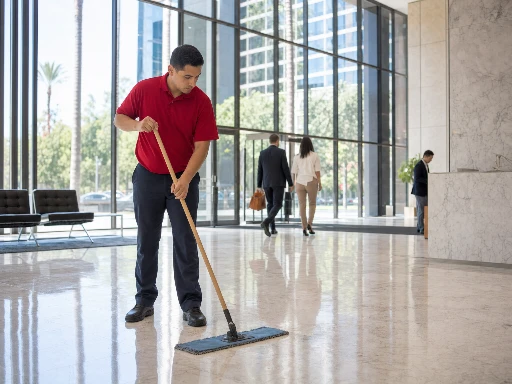
Day porter services keep a Class A Los Angeles office building clean, safe, and presentable during business hours — covering restroom restocking, spill response, lobby maintenance, overflowing trash removal, stain treatment, and debris cleanup throughout the day. Unlike overnight janitorial services, day porter service runs while the building is fully occupied, addressing every cleanliness need that appears between regular cleaning cycles. For Class A buildings with heavy foot traffic, high-end tenants, and visible front-of-house standards to maintain, a well-managed day porter program is not optional. It is a core part of keeping the facility clean and the environment safe for everyone inside. This guide covers how to structure, scope, staff, and manage day porter services effectively.
What Day Porter Services Actually Cover
A day porter is a dedicated building service technician who works during occupied hours to maintain cleanliness and address issues in real time. Day porter service is both reactive and proactive: the porter completes scheduled tasks on a defined route while responding to spills, restroom supply shortages, overflowing trash cans, lobby debris, stains in common areas, and other conditions that cannot wait until the overnight janitorial services crew arrives. The goal of day porter service is to keep the facility clean throughout the day — not just at the start of the morning — and to create a consistently safe environment for tenants, visitors, and building staff.
Standard Day Porter Service Tasks
Most day porter service programs for Class A office buildings include restroom checks and restock on a defined interval, typically every 60 to 90 minutes depending on floor occupancy and traffic levels. On each restroom pass, the porter verifies that paper towels, toilet paper, hand soap, and seat covers are stocked, empties trash cans before they overflow, wipes down sinks and counters after heavy-use periods, and treats any stain or splash on surfaces. This kind of consistent restroom maintenance is the core of any day porter service program and the most visible measure of whether the building's cleanliness standards are being met. Tenants notice immediately when restroom conditions fall behind, and overflowing trash cans or empty soap dispensers are the fastest way to generate complaints.
Beyond restroom service, a day porter monitors lobbies and elevator cabs for spills, scuff marks, smudged glass, and tracked-in debris. Lobby cleanliness is the first impression tenants and their clients get when they enter the building. A lobby that shows wear, spills, or debris by mid-morning signals that the building's day porter program is either understaffed or poorly managed. Day porter services also include stain response on carpet and upholstery in common areas before stains set permanently, trash can emptying in break rooms and collaborative spaces during peak use periods, restock of supplies in shared amenity areas, floor care touchups in high-traffic corridors, and support for events or move-ins as needed. The combination of regular cleaning passes and responsive day porter service keeps the facility clean at a standard consistent with Class A expectations.
What Day Porter Service Does Not Cover
Day porter service is not a substitute for overnight janitorial services. The overnight janitorial services crew handles deep cleaning tasks, floor care cycles including stripping, waxing, and buffing hard floors, thorough restroom disinfection, and other cleaning operations that cannot be performed while the building is occupied. A day porter maintains cleanliness between those regular cleaning cycles; the janitorial services team resets the building each night. Both programs work together to keep the facility clean and the environment safe — a gap in either one is visible in the building's condition. Tenants in Class A buildings expect both, and facilities that eliminate day porter service to cut cost typically see a significant drop in tenant satisfaction ratings within 30 days.
How to Structure the Scope of Work
The most common failure in day porter program management is a scope of work that is too vague. "Check restrooms and common areas" is not a scope. It is a starting point for misunderstanding that leads to inconsistent cleanliness, tenant complaints, and disputes over what the day porter service vendor is actually responsible for delivering. A well-written day porter scope of work defines specific locations, tasks, frequencies, response protocols, and cleanliness standards that allow the commercial cleaning vendor and the property manager to hold each other accountable for outcomes.
Route and Frequency
A day porter service scope should define a route: the sequence of locations the porter covers during each pass, how often they complete the route, and how long each stop should take. For a multi-tenant Class A building with shared restrooms on each floor, a 90-minute restroom check and restock interval is a reasonable starting point for regular cleaning coverage. Buildings with food service, high-density tenant floors, lobby coffee service, or amenity spaces like fitness centers or conference facilities typically need 60-minute intervals or additional dedicated day porter service coverage to keep cleanliness standards consistent.
The scope should also specify exactly what a "restroom check" includes. Does the porter restock proactively on every pass, or only when supplies are nearly depleted? Do they treat any visible stain on the counter or floor, or only report it? Do they empty every trash can on every pass, or only if it is overflowing? These details matter because different answers produce different cleanliness outcomes, and a building that expects proactive day porter service but contracts for reactive service will not get the clean and safe environment tenants expect. Specify the standard, write it into the scope, and inspect against it.
Customize the Program to the Building's Specific Needs
No two Class A buildings have the same day porter service requirements. A 200,000-square-foot tower with 1,500 daily occupants, ground-floor retail, and multiple food service tenants needs a fundamentally different program than a 60,000-square-foot creative office building with a single primary tenant and no food service. A good commercial cleaning vendor will customize the day porter service program to the building's specific needs during the scoping process, taking into account tenant mix, floor plate layout, food service locations, amenity spaces, peak-traffic patterns, and seasonal cleanliness demands. Janitorial services vendors who apply a generic template across all buildings cannot customize effectively, and it shows in cleanliness outcomes.
According to the ISSA's 2026 Cleaning Industry Benchmarks, labor accounts for the largest share of commercial cleaning service cost, and day porter programs are no exception. The BSCAI (Building Service Contractors Association International) notes that labor runs 50 to 65 percent of a commercial cleaning contractor's operating cost. Understanding that day porter service is primarily a labor-intensive investment helps property managers set realistic cost expectations relative to the coverage hours and cleanliness outcomes they are buying.
Managing the Day Porter Program Day-to-Day
Managing a day porter service program well requires more than signing a contract. It requires a defined communication channel between the property manager and the commercial cleaning vendor, a clear escalation path for urgent spill and debris situations, and a regular inspection schedule that keeps both parties honest about cleanliness performance. Consistent oversight is what keeps the facility clean and the environment safe between formal walk-throughs, and prevents small cleanliness gaps from becoming tenant complaints or lease-renewal concerns.
Communication and Escalation for Spills and Debris
The property manager or facilities coordinator should have a direct line to the day porter service supervisor — not just the commercial cleaning company's main office. When a spill happens in the lobby during a busy morning, when a restroom runs out of supplies right before a tenant's board meeting, when overflowing trash cans appear in a common area, or when a stain is discovered on carpet in a high-visibility location, the response time matters. A well-managed day porter service program includes a clear protocol for urgent requests so the porter or supervisor can respond within minutes to restore a clean and safe environment for tenants — not hours later after the damage to the building's reputation is already done.
Some commercial cleaning vendors use digital check-in systems or service log applications that time-stamp each restroom check, restock, trash can emptying, and task completion throughout the day. This kind of real-time documentation supports vendor accountability and gives the property manager direct visibility into whether the day porter service route is being completed on schedule and at the defined cleanliness standard. If your current janitorial services vendor does not offer any form of service log or digital check-in record for day porter coverage, it is worth asking why — or looking at commercial cleaning vendors who do.
Regular Walk-Throughs and Performance Reviews
Monthly walk-throughs with the day porter service supervisor are a standard part of managing any commercial cleaning contract. A joint walk-through gives both the property manager and the vendor the chance to identify areas where the day porter program is meeting cleanliness standards, areas where the specific needs of certain spaces are not being addressed, and opportunities to adjust the route, restock frequency, or debris response protocol before a pattern becomes a tenant complaint. Consistent walk-throughs are also the best way to catch floor care deterioration, stain accumulation, or lobby cleanliness issues that develop gradually and are easy to miss without a structured review.
Tenant feedback is a signal worth tracking systematically. In a multi-tenant Class A building, restroom cleanliness and lobby maintenance are the two most consistent drivers of tenant satisfaction and dissatisfaction. A day porter service program that keeps restrooms consistently stocked, lobbies clean and debris-free, overflowing trash cans emptied before they are noticed, and the overall environment safe and clean throughout the building day is one of the most visible ways a property management team demonstrates its commitment to building quality. Buildings that maintain a safe environment and high cleanliness standards tend to retain tenants at higher rates and support stronger lease terms over time.
Day Porter Cost and What Drives It
Day porter service cost is primarily a function of covered hours. Most commercial cleaning vendors price day porter programs on an hourly rate per porter, with total monthly cost reflecting the number of coverage hours the building requires. A building that needs one porter for six hours per day, five days a week, is buying approximately 130 hours of day porter service per month. The cost per hour varies by market and vendor quality, but the ISSA's 2026 benchmarks place commercial cleaning labor cost in the Los Angeles market toward the higher end of the national range — consistent with the city's overall labor cost environment and minimum wage structure.
Additional factors that drive day porter service cost include the number of floors covered, the complexity of amenity spaces and food service areas, whether the day porter service includes consumable supply ordering and restock management versus just installing supplies the building procures separately, the response standard for urgent spill and debris situations, and whether event or move-day support is included in the base scope or billed as additional service. Buildings that want to maintain a consistently clean and safe facility at a Class A standard throughout the day should budget for adequate coverage hours — cutting day porter service hours to reduce cost almost always results in cleanliness problems that cost more to address than the savings generated.
Property managers evaluating day porter service cost should compare vendors on covered hours, defined scope, and cleanliness standards — not on price per hour alone. A vendor quoting a lower hourly rate but covering fewer floors, performing fewer tasks per pass, or using a slower restroom restock interval may deliver far less cleanliness value than a slightly higher-cost vendor with a comprehensive route and documented outcomes. Request a detailed scope of work and cleanliness standard with every day porter service quote so you can compare programs, not just prices.
Pro tip: Build a one-page day porter service scope matrix that lists every covered location, task, and frequency — including restroom restock intervals, trash can check frequency, debris response time, and floor care touchup schedule. Share it with prospective vendors when requesting quotes. Vendors who respond without referencing your scope are pricing a generic janitorial services template, not a day porter program customized to your building's specific needs.
When to Add or Adjust Day Porter Service Coverage
Day porter service programs should be reviewed whenever the building's usage patterns or tenant mix changes significantly. New tenants with high occupancy, added food service or amenity spaces, a substantial increase in building events, or a change in the overnight janitorial services schedule are all triggers for reassessing whether the current day porter coverage level is still adequate to maintain a clean and safe environment throughout the facility. Buildings that grow without adjusting their day porter service staffing almost always see cleanliness decline — more overflowing trash cans, more unaddressed spills in the lobby, more stains in high-traffic corridors, and more tenant complaints about restroom conditions.
Buildings that experience recurring cleanliness complaints about restroom conditions, overflowing trash cans in common areas, debris in elevator lobbies, or lobby cleanliness are almost always under-covered on day porter service hours — not poorly cleaned by their overnight janitorial services crew. Adding day porter coverage hours or adjusting the route to prioritize problem areas is typically faster and more cost-effective than trying to solve a daytime cleanliness problem with additional overnight cleaning. Regular cleaning augmented by targeted day porter service is the right answer for most Class A buildings that have fallen behind on daytime cleanliness standards.
MNZ Commercial Cleaning Services has managed day porter service programs for Class A office buildings across Los Angeles since 1979. Our day porter services are customized to each building's specific needs, with defined route documentation, digital service logs, and a direct line to the on-site supervisor for urgent spill, debris, and restock requests. If your current program is not keeping the facility clean and the environment safe for tenants during business hours, call us at (818) 480-9316 or visit mnz.com to discuss what a properly structured day porter service program for your building would include.
Frequently Asked Questions
What is the difference between a day porter and a janitor?
A janitor typically works overnight or outside occupied building hours to perform thorough cleaning of restrooms, floors, and common areas as part of the regular cleaning cycle. A day porter works during occupied hours to maintain cleanliness in real time — handling restroom restock, spill response, debris removal, overflowing trash can emptying, stain treatment, lobby touchups, and floor care maintenance throughout the day. Both roles are part of a complete commercial cleaning and janitorial services program for a Class A building, and both are necessary to maintain a consistently clean and safe environment for tenants.
How many day porters does a Class A office building need?
Building size, occupancy density, food service presence, and amenity load determine the right day porter service staffing level. A general starting point for day porter coverage is one porter per 100,000 to 150,000 square feet for buildings with standard office use and moderate foot traffic. Buildings with ground-floor retail, active food service, fitness centers, or high-frequency tenant events typically need higher day porter coverage ratios to keep the facility clean, restrooms consistently restocked, overflowing trash cans addressed, and lobby cleanliness maintained throughout the day. A scoping walk-through with a commercial cleaning vendor is the most reliable way to determine the right day porter staffing level and cost for a specific building.
Can day porter service replace overnight janitorial service?
No. Day porter service addresses real-time cleanliness needs during occupied building hours — restroom restock, spill response, lobby debris, overflowing trash cans, stain treatment — but it does not substitute for the deep cleaning, restroom disinfection, and floor care that overnight janitorial services provide. The two programs serve different functions and work best when both are in place. Buildings that try to replace overnight janitorial service with extended day porter service hours typically end up with a facility that looks reasonably clean during the day but deteriorates steadily over weeks without proper nightly maintenance and regular cleaning of hard floors, restrooms, and common surfaces.
What should be included in a day porter service contract?
A day porter service contract should specify the covered locations and task list for each stop, the schedule and frequency of restroom checks and restock passes, the response protocol and time standard for urgent spills and debris situations, which consumable supplies the commercial cleaning vendor provides versus the building, the floor care touchup schedule, the inspection and service log reporting process, and the cleanliness standard used to evaluate performance. A contract that does not define a task list, cleanliness standard, and response time is not a day porter service agreement — it is an agreement to provide labor with no accountability for keeping the facility clean and the environment safe for building tenants.
MNZ Commercial Cleaning Services has delivered day porter service and full janitorial services to Class A office buildings across Los Angeles since 1979. Call us at (818) 480-9316 or visit mnz.com to get a customized day porter service scope and cost estimate for your building.
Related Reading
What Do Office Janitorial Services Include for a Los Angeles Commercial Building?
What Should a Commercial Cleaning SLA Include to Hold Your Vendor Accountable?
Transform your space into a clean and welcoming environment with MNZ. Contact us today to schedule a consultation and get a quote for our professional cleaning and maintenance services.
.jpg)


