
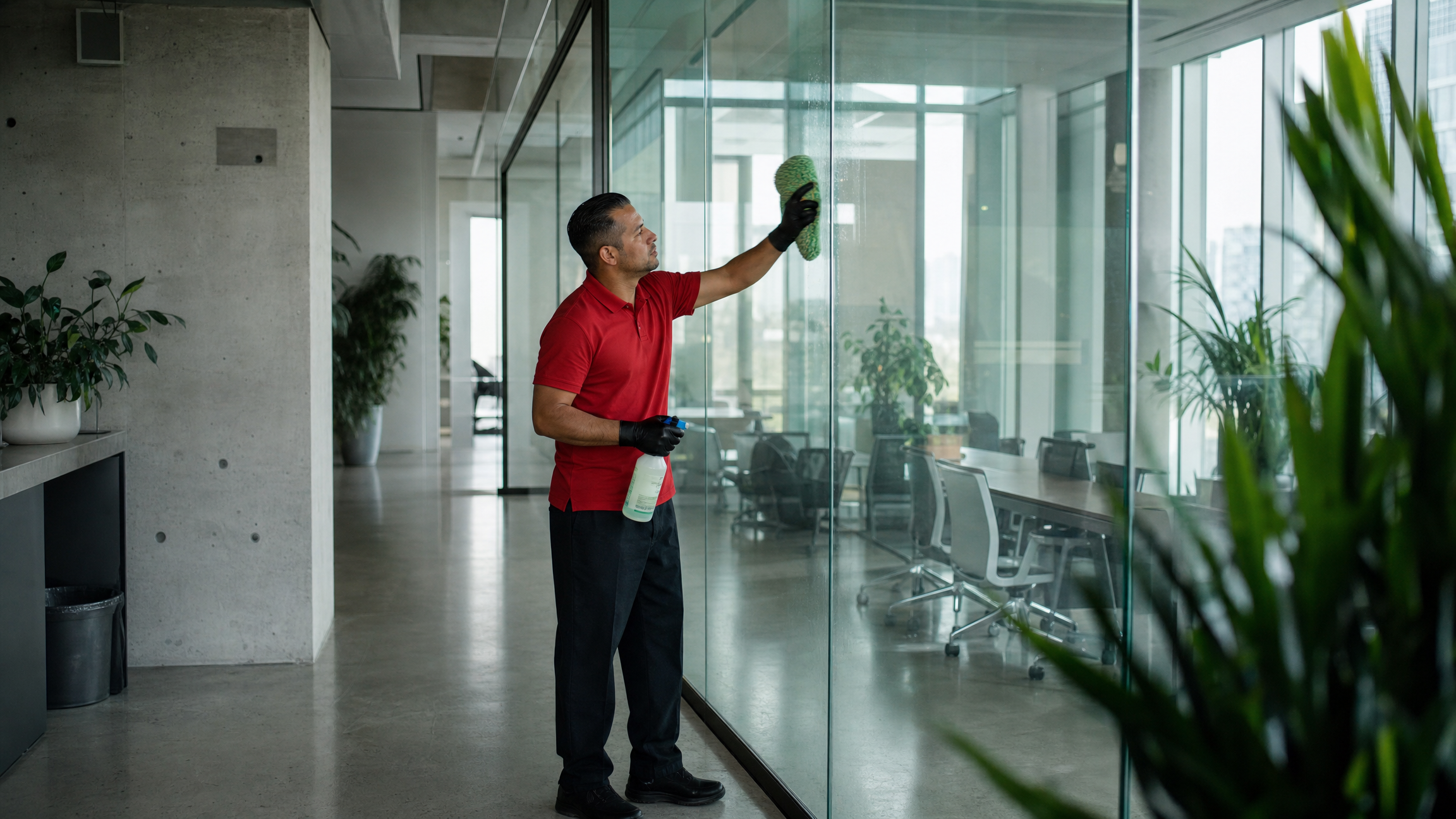
LEED-certified offices in Los Angeles need more than green products on a supply shelf to satisfy their LEED for Existing Buildings: Operations and Maintenance (LEED EB: O+M) credits. They need a documented green cleaning policy, third-party-certified products, and a cleaning partner who understands the audit trail. According to the U.S. Green Building Council (USGBC), the Green Cleaning prerequisite under LEED v4.1 O+M requires written policies covering chemical selection, equipment standards, and occupant complaint response, all in place before the certification period closes. This guide walks you through exactly how to build that program, what LA property managers often get wrong, and what to look for in a commercial cleaning contractor who can keep your LEED certification intact year after year.
What LEED Actually Requires for Green Cleaning
Many property managers assume "green cleaning" means switching to products with a leaf on the label. LEED EB: O+M sets a harder standard than that. The Green Cleaning prerequisite and the associated credit require a formal policy, verified product certifications, and documentation that the program is actually being followed, not just described in a binder.
The Green Cleaning Policy
LEED v4.1 O+M requires a written green cleaning policy that covers which products are acceptable, what cleaning equipment standards apply, how to handle high-risk situations like chemical spills or infection events, and how to respond to occupant complaints. The policy must be specific to the building, signed by management, and current within the certification period. A generic company-level cleaning policy does not satisfy this requirement.
Product Certification Requirements
Cleaning products must carry third-party certification from an approved program. LEED accepts Green Seal GS-37, UL EcoLogo (formerly EcoLogo), and EPA Safer Choice labels as qualifying certifications. Products without one of these certifications don't count toward the credit percentage threshold, even if the label says "eco-friendly," "natural," or "non-toxic." The USGBC calculates credit achievement based on the percentage of products used that carry qualifying certifications, by cost.
Equipment Standards
LEED also covers cleaning equipment. Vacuum cleaners used on LEED-certified floors must be certified by the Carpet and Rug Institute's Seal of Approval program. Powered floor maintenance equipment must use micro-filtration bags or HEPA filtration, and must operate at or below 70 dBA. High-pressure washing equipment used outdoors must capture and treat wastewater where local codes require it. These equipment standards catch many cleaning companies off-guard because they require capital investment, not just a product swap.
Indoor Air Quality and VOC Reduction
One of the most significant benefits of a documented green cleaning program is the reduction in volatile organic compounds (VOCs) introduced into the indoor environment by cleaning products. Conventional cleaning chemicals can off-gas VOCs that degrade indoor air quality (IAQ) and trigger respiratory symptoms in occupants with asthma, chemical sensitivities, or allergies. Low-VOC and VOC-free certified cleaning products reduce this exposure. LEED's green cleaning credit is partly designed around this health outcome: a building that documents certified, low-impact product use contributes directly to better IAQ scores and occupant health metrics. For property managers in Los Angeles, where workplace wellness programs increasingly track indoor environmental quality, a certified green cleaning program is a differentiator in the leasing conversation and a concrete benefit that facility managers can report to building ownership.
Building the Green Cleaning Program Step by Step
Building a LEED-compliant green cleaning program from scratch takes about four to six weeks for a typical Class A Los Angeles office building, assuming your cleaning contractor is already familiar with the requirements. Here's the process:
Step 1: Audit Your Current Products and Equipment
Start with a full inventory of every cleaning product used in the building: general-purpose cleaners, disinfectants, glass cleaners, floor care products, hand soaps, and restroom cleaners. For each product, identify whether it carries a Green Seal, UL EcoLogo, or EPA Safer Choice certification. Calculate what percentage of your current product spend qualifies. Most buildings doing this audit for the first time find they're at 20 to 40% compliant before any changes, primarily because hand soaps or a glass cleaner happens to carry a certification.
Step 2: Replace Non-Qualifying Products
For products that don't carry qualifying certifications, identify certified alternatives. Green Seal maintains a searchable database at greenseal.org. EPA Safer Choice has a similar product finder. Certified alternatives exist for virtually every commercial cleaning product category. The cost difference between certified and non-certified commercial cleaning products has narrowed significantly since 2020, per ISSA's 2026 industry data. Budget a 5 to 15% product cost increase on your initial swap, but expect that gap to close as certified products continue to scale.
The product transition is also a good time to evaluate your cleaning tools and dispensing systems. Microfiber mops and microfiber cloths capture particulate more effectively than conventional cotton mops, reduce the volume of water and chemical solution required per cleaning cycle, and are compatible with LEED-compliant cleaning programs. Dilution control dispensing systems further reduce waste by delivering the correct concentrate ratio each time, eliminating the over-application that wastes product, leaves chemical residue on surfaces, and contributes to indoor air quality problems. These equipment upgrades reduce the environmental footprint of your cleaning program and support the documentation of a sustainable janitorial services operation.
Step 3: Verify Your Equipment
Pull the model numbers on every vacuum in the building. Cross-reference them against the Carpet and Rug Institute's Seal of Approval list at carpet-rug.org. Do the same for powered floor care equipment: confirm micro-filtration bags are in use and check the operating decibel level in the product spec sheet. If any equipment doesn't meet the standard, it needs to be replaced before the LEED certification period opens. This is not optional.
Step 4: Write the Green Cleaning Policy
The policy document doesn't need to be long. A well-constructed green cleaning policy runs three to five pages and covers: the building's commitment to green cleaning, the approved product list with certification references, equipment standards and verification schedule, procedures for cleaning high-risk areas (restrooms, food prep, trash handling), occupant complaint procedures, and the name of the person responsible for maintaining the program. Your cleaning contractor should contribute their operational procedures to this document, not just sign off on one you wrote without their input.
Step 5: Set Up Documentation and Tracking
LEED auditors want to see proof the program runs, not just a policy on paper. Track product purchases by category and certification status throughout the performance period. Keep equipment maintenance records showing filter replacements and certification status. Log any occupant complaints related to cleaning and document how they were resolved. Most property managers use a simple spreadsheet for this. Some cleaning companies provide monthly compliance reports as part of their service agreement, which makes the LEED documentation process significantly easier.
Pro tip: Ask your cleaning contractor for their product SDS (Safety Data Sheets) and certification documentation before the LEED review period opens, not during it. A contractor who can't produce current SDS sheets and certification dates on request is a compliance risk you don't want to discover in an audit.
Common Mistakes Los Angeles Property Managers Make
Building managers working toward LEED certification or maintaining an existing certification tend to make the same mistakes. Here are the ones we see most often, and how to avoid them.
Assuming "Green" Products Are Automatically Certified
Marketing language on cleaning products is unregulated. A product can legally call itself "eco-friendly," "plant-based," or "sustainable" without any third-party verification. LEED requires certification, not claims. Run every product through the certification database rather than relying on the label.
Not Including Occupant Complaint Procedures
The LEED Green Cleaning policy must include a formal occupant complaint procedure: how occupants report cleaning-related concerns, who receives the report, and what the response timeline is. This section gets omitted most often when property managers write the policy without input from their cleaning contractor. Complaints about fragrance sensitivity, cleaning residue, or surface damage need a documented response path to satisfy the credit requirement.
Failing to Requalify After a Cleaning Contractor Change
Switching cleaning vendors mid-certification period is a common trigger for LEED compliance gaps. The new contractor may use different products and equipment that haven't been verified against LEED standards. Any change in cleaning contractor should trigger an immediate product and equipment audit before the new team starts work. Build this requirement into your cleaning services contract as a formal transition protocol.
Ignoring Equipment Replacement Timelines
Vacuum cleaners and floor equipment wear out. CRI-certified vacuums lose their certification status if the HEPA filter is past its replacement interval. Build equipment maintenance and filter replacement into your cleaning contract with documented intervals. A certified vacuum running a clogged or expired HEPA filter is a certified vacuum that no longer performs to its certification standard.
What to Look for in a Green Cleaning Contractor in Los Angeles
Choosing the right cleaning partner is the single biggest factor in maintaining a LEED-compliant green cleaning program. Here's what to ask during the selection process:
CIMS-GB Certification
The Cleaning Industry Management Standard Green Building (CIMS-GB) certification from ISSA is the cleaning industry's equivalent of a LEED credential for contractors. CIMS-GB certified companies have demonstrated that their management systems, training programs, and operational procedures align with green building requirements. Not every qualified cleaning company in Los Angeles holds this certification, but it's a strong indicator of a contractor who understands LEED documentation and can manage the compliance reporting you'll need.
Documented Product Lists with Certification References
Ask every bidder to provide their current approved product list with the certification program and certification date for each product. If a contractor can't produce this list, they're not operating a documented green cleaning program, and they won't be able to support your LEED audit documentation either.
Equipment Verification on Request
Ask to see the CRI Seal of Approval certificates for their vacuums and the equipment spec sheets showing decibel ratings for powered floor care equipment. A contractor who does LEED-compliant work regularly can produce these documents without a delay.
How MNZ Supports LEED-Certified Office Buildings in Los Angeles
MNZ Commercial Cleaning Services has worked with Los Angeles commercial property managers since 1979. We use certified products across our entire product line, maintain CRI-approved equipment, and can provide product documentation for LEED compliance reporting on request.
Our LEED building clients receive a monthly product compliance summary alongside their standard service documentation, which covers product names, certification programs, and purchase quantities by category. This makes the annual LEED review period significantly less work for property management teams.
BSCAI's 2026 data shows labor represents 50 to 65% of a commercial cleaning company's operating cost. A contractor who bids significantly below market on a LEED building is almost certainly cutting labor hours, which directly impacts documentation quality and program consistency. We'd rather explain our pricing honestly than win a bid and create a LEED compliance problem six months later.
Our cleaning staff undergo documented training on green cleaning best practices, certified product handling, and LEED-specific protocols. Auditors conducting LEED EB: O+M reviews periodically request evidence of staff training as part of the program documentation. We maintain training records for all crew members assigned to LEED buildings and can provide them on request. This level of documented program management is what separates a green janitorial services provider from a cleaning company that simply switched to green products.
The Business Case for Green Cleaning in Los Angeles Commercial Buildings
Beyond LEED compliance, a documented green cleaning program delivers measurable business value for Los Angeles commercial property owners and operators. Understanding this case helps property managers justify the program investment to ownership and communicate its value to current and prospective tenants.
Tenant health and productivity is the most direct business argument. Research published through the USGBC and peer-reviewed occupational health journals documents that occupants in buildings with documented indoor air quality management programs report fewer sick days, fewer respiratory complaints, and higher workplace satisfaction scores than occupants in conventionally maintained buildings. For office tenants in Los Angeles, where lease rates for Class A space in DTLA, Century City, and the Westside regularly exceed $50 per square foot annually, the ability to show tenants a documented, third-party-verified cleaning program is a concrete lease retention and renewal argument.
Liability reduction is a second business driver. Buildings with documented cleaning protocols and certified product use have a cleaner evidentiary record when occupant health complaints arise. The alternative — reacting to a tenant complaint about chemical sensitivity or cleaning-related health impacts without documentation — creates liability exposure that a green cleaning program explicitly manages. Property managers in Los Angeles managing buildings occupied by legal, financial, or healthcare tenants frequently encounter lease provisions requiring documented cleaning standards as a condition of the lease.
LEED recertification value maintenance is the third driver. LEED EB: O+M certification adds verifiable market value to commercial real estate in Los Angeles. Buildings that maintain certification through systematic programs — rather than scrambling to document compliance just before the review period — preserve that value through consistent operational practice. Buildings that lose LEED certification due to cleaning program gaps face a recertification process more time-consuming and expensive than maintaining the program continuously.
Energy and water savings from sustainable cleaning practices add operational savings over time. Microfiber systems and dilution control dispensing reduce water use and chemical concentration, cutting product costs and wastewater generation. HEPA filtration in vacuums reduces particulate recirculation through HVAC systems, extending filter life and reducing HVAC maintenance frequency. These operational savings may be modest on a per-building basis, but they add up across a portfolio and support sustainability reporting that increasingly influences institutional investor ESG assessments.
Competitive differentiation in a tight Los Angeles leasing market is the fifth driver. The Los Angeles commercial real estate market has seen growing tenant demand for documented sustainability practices. Corporate tenants with ESG reporting obligations increasingly scrutinize building management practices as part of their leased-space decision process. A documented, certified green cleaning program is one component of a broader building sustainability story that helps differentiate properties in a competitive market. Property managers who can point to a formal green cleaning policy, certified product use, and a long-term contractor relationship with documented LEED compliance experience are better positioned in conversations with ESG-conscious tenants than those who cannot.
FAQ: Green Cleaning Programs for LEED Offices in Los Angeles
Does a green cleaning program cost more than standard commercial cleaning?
For product costs, expect a 5 to 15% premium initially as you replace non-certified products. Labor costs are the same. Many certified products are now price-competitive with conventional alternatives, particularly in high-volume categories like all-purpose cleaners and glass cleaners. Over a full certification cycle, the cost difference is typically much smaller than the initial estimate.
Can we get LEED credit for our existing cleaning program without a full overhaul?
Possibly. Run the product audit in Step 1 of this guide first. Buildings that already use a certified glass cleaner, certified hand soaps, and a few other standard certified products may be partway to the threshold already. The LEED Green Cleaning credit uses a percentage-of-cost calculation, so higher-volume products matter more than niche specialty items.
What happens if we switch cleaning contractors and the new company uses non-certified products?
You risk losing the Green Cleaning credit, which can affect your overall LEED recertification score. Any contractor transition should include a product and equipment audit before the new team starts work. Build this into your cleaning contract as a formal changeover requirement, not an afterthought.
How often does the green cleaning documentation need to be updated?
The green cleaning policy should be reviewed annually and updated whenever products, equipment, or procedures change. Product purchase records and complaint logs should be maintained continuously throughout the LEED performance period, which is typically three years for recertification. Don't wait until the review period to compile records: build the documentation habit from month one of the certification cycle.
Want to discuss a green cleaning program for your LEED-certified or LEED-pursuing building in Los Angeles? Call MNZ at (818) 480-9316 or reach out through our contact page. We'll walk through your current program, identify the gaps, and give you a written scope for a compliant green cleaning service.
Related Reading
What Should an Office Cleaning Schedule Include for Los Angeles Commercial Buildings?
What Should a Commercial Cleaning SLA Include to Hold Your Vendor Accountable?
Transform your space into a clean and welcoming environment with MNZ. Contact us today to schedule a consultation and get a quote for our professional cleaning and maintenance services.
.jpg)


