
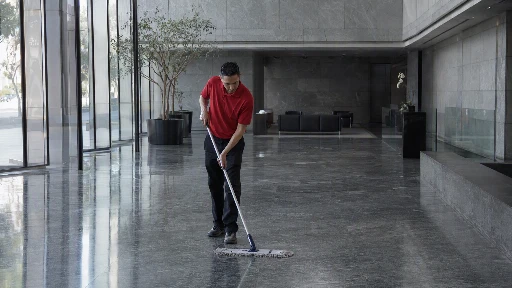
Most Los Angeles property managers ask this question once a year, usually when the cleaning contract comes up for renewal or after a bad stretch with an unreliable crew: would we be better off just hiring our own people? The data has a pretty clear answer for buildings over 20,000 square feet. Outsourcing commercial cleaning to a vetted vendor typically costs 20 to 30 percent less than running an equivalent in-house janitorial team, once you account for benefits, workers' compensation, turnover, and supervisory overhead. That said, cost isn't the only factor, and there are situations where direct hire makes sense. Here's a framework for making that decision honestly for your property.
What In-House Janitorial Staffing Actually Costs
When a facilities director hires cleaning staff directly, the visible number is the hourly wage. The fully-loaded cost is considerably higher. According to the Building Service Contractors Association International (BSCAI), labor accounts for 50 to 65 percent of a cleaning company's total operating costs. That same overhead lands directly on you when you bring the work in-house. Managing a team of cleaning staff also requires significant supervisory time that most facilities budgets underestimate when making this decision.
For a California employer, direct costs for in-house janitorial staff typically include:
Turnover Is the Hidden Budget-Killer
Annual turnover in the janitorial sector runs between 35 and 40 percent, according to BSCAI industry data. On a crew of five, that's two replacements per year on average. Each replacement costs a realistic $1,500 to $2,500 once you price in job postings, background checks, onboarding paperwork, and the productivity dip while a new hire learns the building. Over a 3-year period, those replacement costs compound into a significant line item most budgets don't capture clearly.
The California Compliance Burden
As a direct employer, your building's HR team absorbs responsibility for California wage and hour law, break and meal period rules, pay stub requirements, final paycheck timing, and hazardous material handling certifications under OSHA's Hazard Communication Standard (29 CFR 1910.1200). A cleaner's on-the-job injury raises your workers' comp experience modification rate, which affects your premiums across your entire property portfolio. When you contract with a commercial cleaning vendor, their workers' comp covers their crew, removing that exposure from your balance sheet.
What You Get When You Outsource Commercial Cleaning
A qualified commercial cleaning vendor isn't just selling labor. You're buying a complete operating system: trained cleaners, management oversight, backup staffing when someone calls out, dedicated account management, equipment, and supplies. You're also buying liability coverage and workers' comp coverage that sits on their policy, not yours.
Where Outsourcing Wins
Professional cleaning companies bring scale advantages most individual property owners can't replicate. Their supervisors are trained to specific quality standards, use digital inspection checklists, and respond when a tenant complaint lands at 7:00 a.m. The first impression that visitors, clients, and prospective tenants form of your building depends on what they see when they walk through the lobby, down the office suite corridors, and into the restrooms. Professional commercial cleaning companies carry their own general liability insurance and workers' compensation, which protects your building from subrogation claims if a cleaner is injured on your property.
For multi-building portfolios, outsourcing gives you a single vendor relationship with consistent standards, one invoice per property (or consolidated billing), and one escalation path. That matters when you're managing commercial spaces across Santa Monica, West Hollywood, and Downtown Los Angeles and don't have capacity to run separate HR processes for custodial staff at each address. A Los Angeles commercial cleaning company operating since 1979 serves portfolios across greater Los Angeles on exactly that structure.
Where Outsourcing Can Fall Short
The most common complaint about outsourced cleaning is crew turnover: new cleaners don't know your building's quirks, and quality dips while they're getting up to speed. A good vendor addresses this by assigning a consistent named crew to your property and documenting the building-specific scope of work in enough detail that a replacement can step in without a quality gap. Ask prospective vendors to show you a sample scope document before you sign. A company that can't produce one is improvising.
Some business owners and property managers prefer direct control over their cleaning staff: the ability to redirect a cleaner to address an urgent need, set individualized cleaning tasks for specific desk areas or conference rooms, and manage performance directly rather than through a vendor account manager. That level of direct control can make sense for owner-occupied buildings where management is on-site daily. For a multi-tenant commercial building, however, most property managers find that a well-structured vendor relationship delivers equivalent responsiveness without the HR overhead.
The other risk is scope erosion: you sign for nightly office cleaning, and over several months the crew drifts from the agreed cleaning tasks. A well-structured SLA with measurable service standards and a clear inspection process closes that gap. Vendors who resist accountability structures are the ones to avoid.
Pro tip: When comparing vendor bids, write your own scope document first and send the same document to all three vendors for pricing. Their proposals will use different formats and emphasize different things. Pricing an identical scope puts the comparison on an equal footing and reveals which vendors are padding their proposals with cleaning services you don't actually need.
A Side-by-Side Cost Comparison: 50,000 Sq Ft Los Angeles Building
To make this concrete, consider a 50,000-square-foot Class A office building in Los Angeles requiring nightly cleaning 5 days per week plus one day porter during business hours.
In-House Team Annual Cost Estimate
In-house annual total: approximately $226,471, or $4.53/sq ft/year.
Outsourced Vendor Annual Cost Estimate
Commercial office cleaning in Los Angeles runs between $0.12 and $0.18 per square foot per month for standard nightly service, according to 2026 ISSA benchmarks. Day porter service adds an hourly rate at market labor costs. The affordability of professional cleaning services becomes even clearer when you factor in the equipment and supply costs that vendors absorb entirely. For the same 50,000 sq ft building:
Outsourced annual total: approximately $137,600, or $2.75/sq ft/year.
The difference on a single building is roughly $88,000 per year. Across a 3-building portfolio with comparable square footage, that gap becomes a meaningful contribution to NOI.
Flexibility, Scalability, and Seasonal Cleaning Needs
One underappreciated difference between the two models is how cleaning frequency and cleaning tasks are managed day to day. With in-house staff, adjusting task scope or adding periodic services requires renegotiating hours, updating job descriptions, and potentially hiring additional staff. Managing a team through those scope changes requires formal HR action every time the cleaning needs of your tenants shift.
Outsourced commercial cleaning companies typically structure service around three tiers: daily tasks (restrooms, trash, vacuuming, desk surface wipe-down, lobby maintenance), weekly tasks (mopping hard floors, glass cleaning, break room deep clean), and periodic services (carpet cleaning, deep cleaning of high-touch areas, floor stripping and waxing). Adjusting cleaning needs across these tiers is handled through the service agreement, not through employment law.
The flexibility and scalability of outsourcing is most visible with seasonal cleaning needs. Los Angeles commercial buildings see increased foot traffic during award season, convention periods, and the holiday retail rush. An office building managing a major tenant move-in needs a one-time deep clean of the entire office suite on top of the regular cleaning schedule. A professional cleaning company absorbs those seasonal peaks through scope amendments; managing a team of direct employees through that kind of variability creates scheduling and payroll complexity that most facilities teams want to avoid.
Cleaner Workspaces: How Professional Cleaning Affects Tenant Retention and Building Impressions
The cleanliness of a commercial building creates a lasting impression on tenants, their clients, and prospective tenants touring the property. When a prospective tenant's facilities manager evaluates a building, desk areas, restrooms, lobby floors, and common area glass are examined closely. A building with consistent professional commercial cleaning retains tenants longer because employees notice when their workspace is clean and well-maintained.
Research on workplace productivity consistently shows that clean workspaces contribute to employee satisfaction and reduce sick days caused by poor sanitation. For a Class A office building in Los Angeles, workspace cleanliness is not just a hygiene concern; it's a competitive positioning matter. Business owners who lease office suite space in professionally managed buildings expect a cleaning standard that reflects the quality of the property. Professional commercial cleaning companies serving Class A buildings are structured to deliver that consistency at every desk, suite, and common area on a nightly basis.
Eco-Friendly Cleaning Products and Sustainable Cleaning Programs
Many Los Angeles commercial property managers now include sustainable cleaning practices in their vendor requirements. Professional cleaning companies serving the Los Angeles market increasingly offer green cleaning programs using environmentally certified products and eco-friendly cleaning solutions. LEED-certified buildings often require cleaning vendors to use LEED-compliant cleaning products, and property managers pursuing LEED Operations and Maintenance certification need a vendor who can document their product choices and cleaning protocols.
An in-house cleaning team can use eco-friendly cleaning products, but the compliance tracking, product selection, and documentation for LEED certification falls on your facilities team to manage. A commercial cleaning vendor with green cleaning program experience brings that expertise pre-packaged into the service agreement. For buildings where sustainability is a leasing differentiator, this is another point in favor of a professional cleaning service over managing a team of directly-employed cleaners.
Popular Los Angeles Locations for Commercial Cleaning Services
Commercial cleaning needs and pricing vary across the Los Angeles basin based on building class, industry concentration, and local foot traffic patterns. Downtown Los Angeles high-rises and Class A office towers demand nightly cleaning services with full-time day porter coverage and rigorous lobby maintenance. Century City's entertainment and law firm office suites require consistent nightly cleaning with careful attention to conference rooms and executive suite corridors. El Segundo and Manhattan Beach tech campuses often need flexible cleaning schedules aligned with extended-hours operations.
Culver City's growing media and tech sector has driven demand for professional cleaning services in adaptive reuse buildings with mixed-use layouts. Santa Monica's commercial corridor and beachfront office properties face unique cleaning challenges from coastal air and high visitor foot traffic. West Hollywood's entertainment-adjacent buildings often require specialized cleaning for event spaces alongside standard office cleaning needs. South Bay commercial and flex spaces require commercial cleaning companies with experience across both office and light industrial environments.
For property managers overseeing buildings across multiple Los Angeles submarkets, working with a professional commercial cleaning company that serves the entire region eliminates the need to manage separate vendor relationships for each address. The impression that a consistently clean building creates across all your properties reinforces your reputation as a professional, well-managed landlord.
When In-House Cleaning Makes Sense
There are genuine situations where direct hire wins. Government-contracted facilities with strict access control requirements may not permit rotating vendor crews. Single-tenant owner-occupied buildings sometimes staff cleaning as part of their in-house facilities team because it simplifies management. Healthcare and life sciences settings with specialized decontamination protocols may prefer direct employees trained to their exact cleanliness standards.
At the other end of the size spectrum: a single-tenant building under 10,000 square feet with light cleaning needs may not justify the overhead of managing a vendor relationship. A part-time directly-hired cleaner can work fine at that scale.
The key question is whether the building's commercial cleaning complexity and size generate enough volume to justify the HR, compliance, and management load that comes with direct employment. For most Class A commercial buildings in the 20,000 square foot range and above, that math favors outsourcing.
What to Require Before Signing with a Vendor
The selection process determines whether outsourcing delivers on its promise or turns into a cycle of complaints and re-bidding. These are the non-negotiable items to verify before contracting with professional cleaning companies:
Insurance and Licensing
Request certificates of insurance showing general liability coverage of at least $1 million per occurrence and $2 million aggregate, plus active workers' compensation. Ask that your building ownership entity be named as additional insured. Verify the vendor's California contractor license status. A credible cleaning service hands these over without hesitation. MNZ Commercial Cleaning Services carries full licensing, is insured and bonded, and holds BBB Accredited Business and Platinum GBB certifications.
Background Screening
Every cleaner entering your building should be background-screened before their first shift. Ask whether screening is done at hire only or refreshed periodically. For buildings with executive floors, IT server rooms, or tenants with confidentiality requirements, this is a hard requirement, not a preference.
Written Scope of Work With Task Frequencies
The scope of work should break down daily, weekly, monthly, and periodic cleaning tasks by area. It should specify which supplies are vendor-furnished versus owner-furnished, define escalation procedures for missed tasks, and set measurable service standards that form the basis of your SLA. A vendor who provides a one-page proposal instead of a detailed scope document isn't ready to serve a Class A commercial building. Ask them to produce one, or move on.
For help structuring your SLA requirements before you go to bid, see our guide on what a commercial cleaning SLA should include to hold your vendor accountable.
Frequently Asked Questions
How long does it take to transition from in-house to outsourced commercial cleaning?
Most transitions can be completed in 4 to 6 weeks without disrupting tenants. The cleanest approach: run a parallel handover period where the incoming vendor shadows your outgoing crew for 1 to 2 weeks, learning the building's specific setup before the changeover date. Give tenants 30 days' written notice and designate a single point of contact for the first month of the new contract.
What should a commercial cleaning contract include to protect the building?
At minimum: a detailed scope of work by area and frequency, written service standards and inspection criteria, response time commitments for complaints and missed cleaning tasks, insurance requirements with your entity as additional insured, price adjustment terms (typically CPI-indexed annually), and a termination clause of 30 to 60 days. Without measurable standards in writing, you have no contractual basis for holding the vendor to the cleanliness level you expect.
Can you outsource cleaning for a portfolio of different building types?
Yes, and it's often more cost-effective than managing separate cleaning companies at each property. A commercial cleaning company with Class A office, medical office, retail, and industrial experience can service mixed portfolios under a single master services agreement with building-specific scopes of work. Centralized billing, a single account manager, and consistent reporting across all properties are the advantages of this structure versus managing multiple local cleaning service providers.
Is outsourced commercial cleaning more or less expensive than it was before the pandemic?
Costs have risen. California's minimum wage increases, insurance rate adjustments, and post-pandemic cleaning protocol upgrades all pushed commercial cleaning pricing up between 2021 and 2025. As of 2026, the ISSA benchmark range of $0.12 to $0.18 per square foot per month for standard office cleaning in Los Angeles reflects the current market. Buildings that haven't re-bid their cleaning contracts since 2020 or 2021 are likely either overpaying for an outdated scope or getting substandard professional cleaning service under a below-market contract their vendor is quietly not fulfilling.
If you're running a Class A commercial property in Los Angeles and your current cleaning situation isn't working, whether that's an in-house crew that's costing more than it should or a vendor who's stopped performing, MNZ Commercial Cleaning Services has been solving that problem for Los Angeles property managers since 1979. We're licensed, insured, bonded, and hold Platinum GBB certification. Call us at (818) 480-9316 or visit mnz.com to request a scope review and quote for your building.
Related Reading
What Should a Commercial Cleaning SLA Include to Hold Your Vendor Accountable?
How to Write a Commercial Cleaning RFP for Los Angeles Properties (With a Bid Comparison Scorecard)
Transform your space into a clean and welcoming environment with MNZ. Contact us today to schedule a consultation and get a quote for our professional cleaning and maintenance services.


