A post-event deep clean for a large Los Angeles venue is one of the most compressed, high-stakes jobs in commercial cleaning. After a 3,000-person corporate conference at the LA Convention Center or a 500-guest gala at a Santa Monica ballroom, you've got a narrow window to restore the space before the next booking, the next business day, or both. According to ISSA 2026 benchmarks, post-event cleaning for large commercial venues typically runs $0.25 to $0.55 per square foot, depending on event density and materials involved. A 30,000-square-foot event floor can require six to twelve cleaning technicians working four to six hours to hit the turnaround window your operations team needs.
This is not a bigger version of your nightly janitorial sweep. Post-event cleaning is its own discipline: it requires a crew that understands load management, has the right equipment for the task density, and can work efficiently without interrupting a parallel setup crew for the next event. Here's what the scope actually covers, how long it takes, and what to look for when you're hiring a cleaning vendor to handle it.
Why Post-Event Cleaning Is Different from Routine Janitorial Work
Standard janitorial service is designed for steady-state occupancy: an office building or retail space with predictable foot traffic, predictable messes, and predictable surface contact. Post-event cleaning is the opposite. You're dealing with concentrated foot traffic, catering waste, dense restroom use over a compressed time window, and often outdoor or tented spaces that your regular crew never touches.
The density problem is real. A venue that seats 1,000 people for a sit-down dinner generates a different cleaning load than the same venue used for a week of normal business operations. Restrooms see occupancy spikes that can overwhelm standard tissue and soap protocols. The entry and lobby take foot traffic in patterns that would take months to accumulate under normal conditions. Catering areas and bar stations present food-safety cleaning requirements that go beyond standard janitorial work.
The timing pressure adds another layer. A typical post-event clean runs late at night or across a Friday-to-Saturday window, often with a same-day or early-morning-next-day turnaround required. That means your cleaning crew needs to be sized for the job from the start. Sending in two people when the job needs eight wastes hours you don't have.
When Post-Event Cleaning Becomes a Deep Clean
Not every post-event job is a deep clean. A corporate networking reception with 200 attendees in a ballroom is different from a three-day trade show with 15,000 badge scans. Deep cleaning applies when the event involves high-density occupancy over an extended period, food service, outdoor components, or specialty surfaces that require more than wipe-down and vacuum work. Signs that a standard turnaround isn't enough: visible soiling on walls or drapes, restroom grout that needs scrubbing, carpet stains from high-heeled traffic or spilled beverages, or kitchen and catering equipment that needs full sanitation rather than a surface wipe.
What a Post-Event Deep Clean Actually Covers
The scope of a post-event clean maps to the event itself. Here's how to think through the coverage zone by zone.
Entry, Lobby, and Pre-Function Spaces
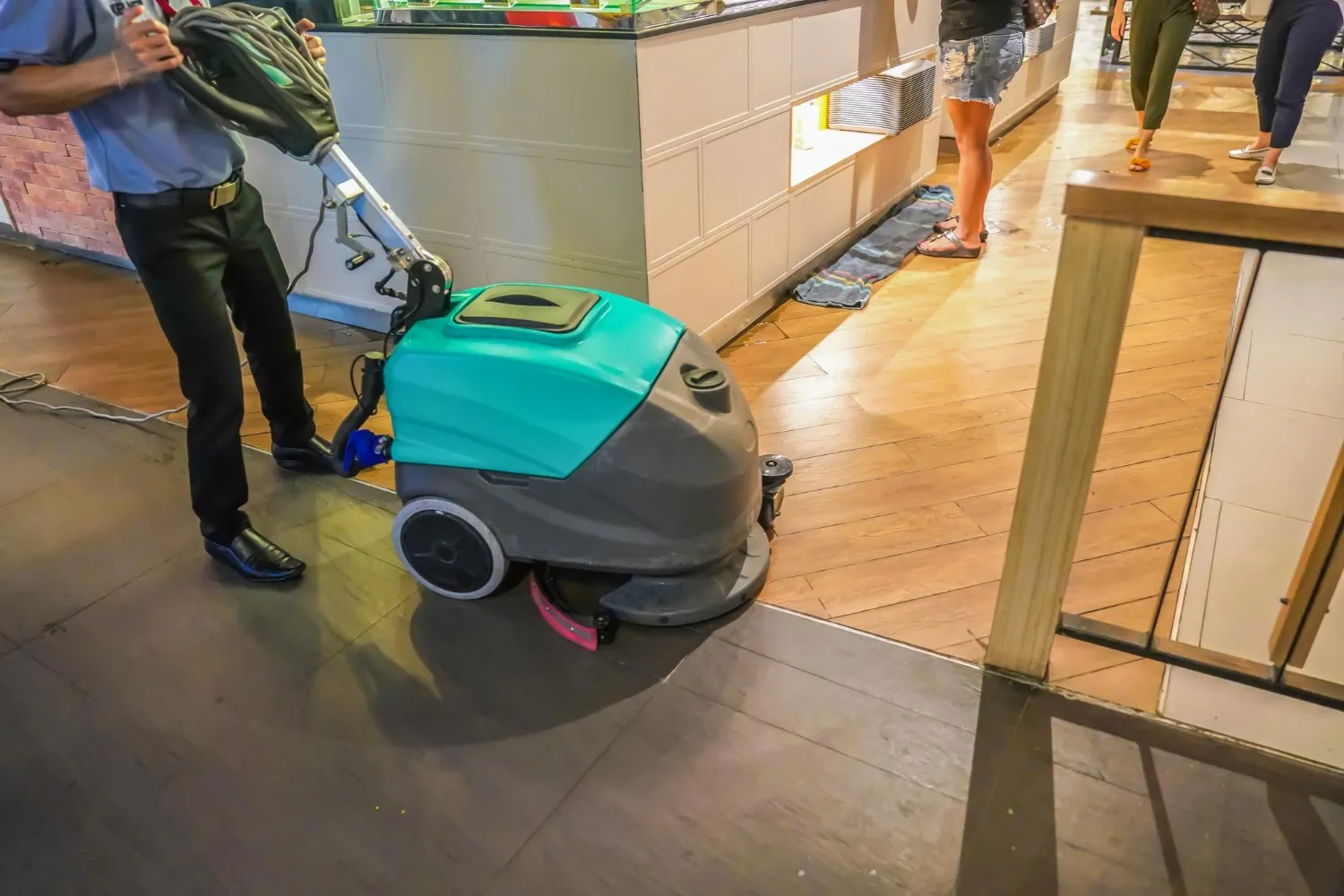
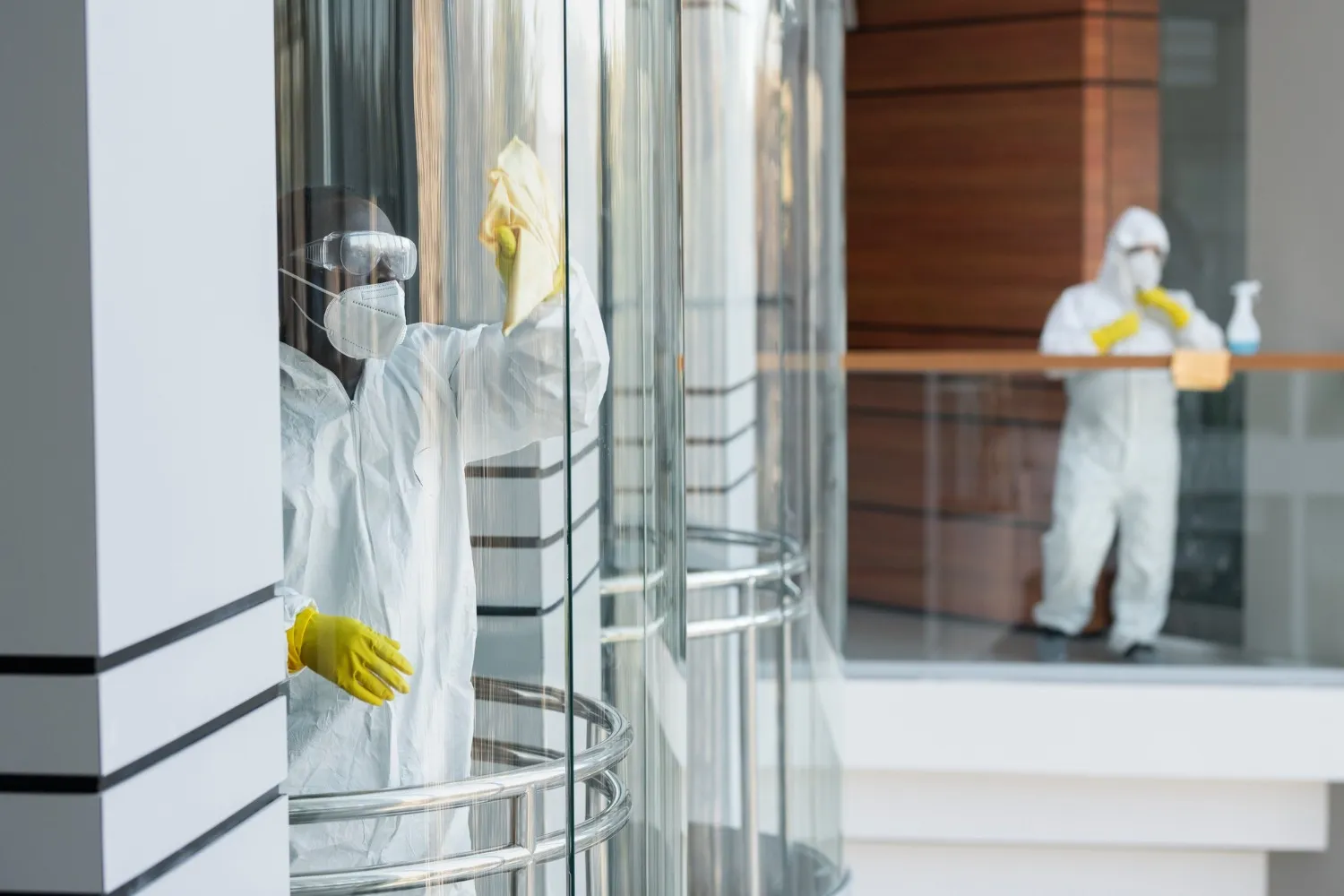
Entry areas take the first and last beating of every event. Hard floors need damp mopping or machine scrubbing after high-heel and outdoor-shoe traffic. Revolving doors and elevator banks accumulate fingerprints and smear from thousands of contacts. Lobby furniture may need spot cleaning or vacuuming. Valet and entry mats, if the event used them, need to be shaken out or machine-cleaned before the next event day. Reception desks and registration stations get sanitized with EPA-registered disinfectants, with particular attention to shared surfaces like stylus stations or name-badge pickup tables.
Main Event Hall or Ballroom
This is the heart of the scope. After the setup crew breaks down tables and chairs, the cleaning crew moves in to sweep and vacuum, spot-treat carpet or hard-floor stains, clean staging areas and speaker risers, and address spills that set during the event. For events with food service, a post-event crew should be checking under tables and seating areas for dropped food and debris that standard vacuum passes miss. Window glass and glass partition walls adjacent to the event space get wiped down. If the event included projection or A/V rigging, the area under rigging points gets a check for any rigging dust or debris that drifted down during the event.
Restrooms
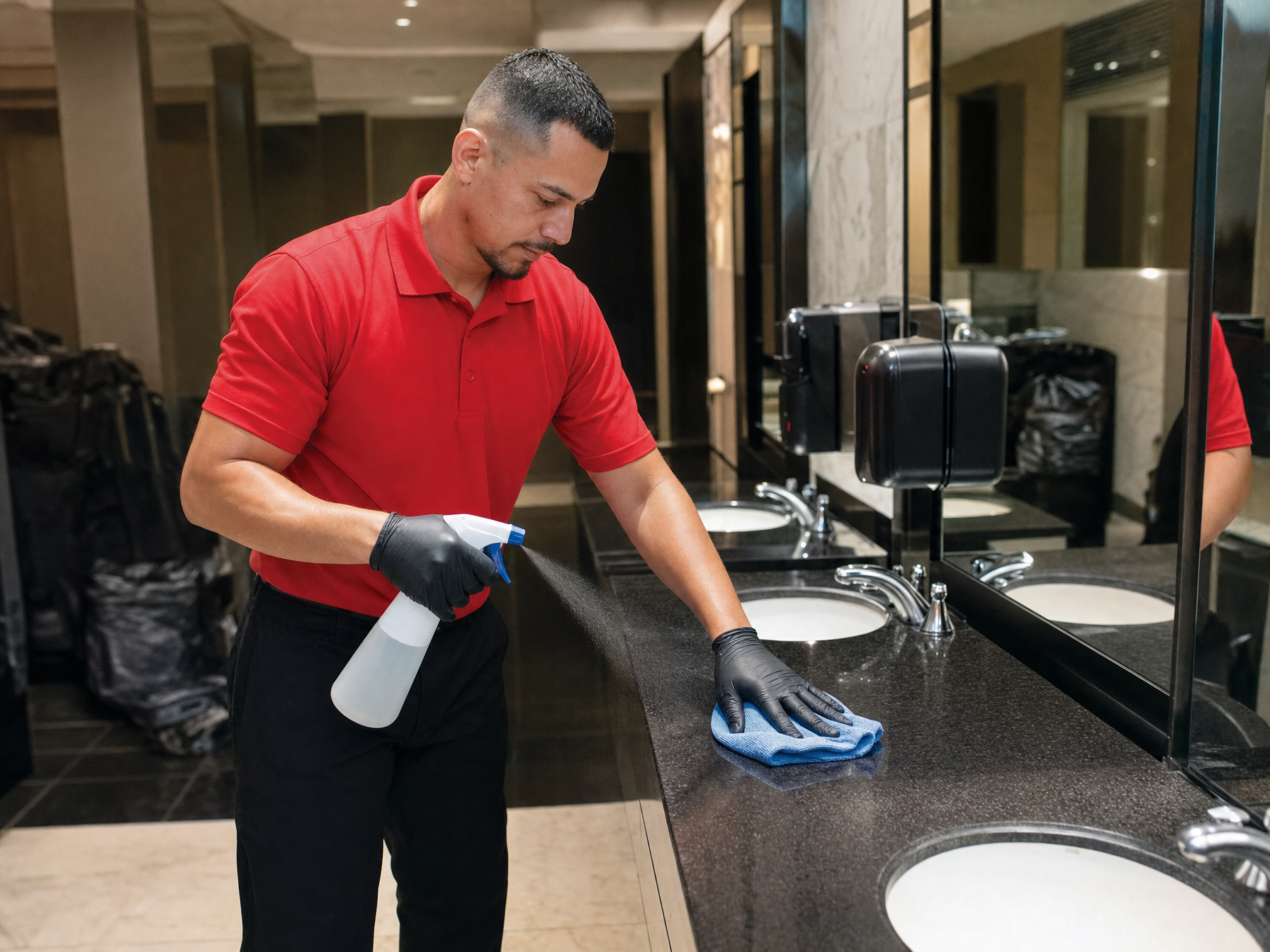
Venue restrooms after a large event need a full reset, not a quick once-over. OSHA 29 CFR 1910.141 sets the minimum sanitation standards for commercial facilities, and a proper post-event restroom clean goes well beyond baseline compliance. Toilets and urinals get scrubbed and disinfected. Sinks, faucets, and countertops get cleaned with EPA-registered disinfectants. Floors are swept and mopped, with attention to grout lines that accumulate traffic. Mirrors get polished. Consumables (soap, paper products, hand sanitizer) are fully restocked before the crew leaves, not just topped off. If an event included outdoor restroom trailers, those get the same full-reset treatment.
Kitchen and Catering Areas
Any space where food was prepared or plated gets treated as a food-safety zone, not a general cleaning zone. Surfaces that contacted food get sanitized with food-safe disinfectants. Grease and food residue on floors and counters get degreased before mopping. Trash and recycling are cleared and bins are relined. If the venue kitchen is shared with an in-house catering operation, coordinate with the kitchen manager before the cleaning crew enters, so no overlap occurs with next-day prep work. BSCAI 2026 notes that kitchen and food-service area cleaning typically represents 20 to 30 percent of the total post-event crew hours, even when the area is a fraction of the total square footage.
Outdoor and Tented Areas
Los Angeles venues often use outdoor plazas, rooftop terraces, and tented spaces for receptions or breakout programming. These areas are frequently overlooked in a standard post-event scope because they're not part of the permanent building. They shouldn't be. Outdoor areas need debris cleared, furniture cleaned or reset, any temporary flooring or turf cleaned or removed, and surfaces wiped down before weather or wind brings additional soiling. For rooftop terraces, pay attention to drainage grates that clog with napkins, stirrers, and small debris during high-attendance events.
Pro tip: Walk the full venue with a floor plan immediately after the event ends and before the cleaning crew starts. Mark any areas with spills, heavy soiling, or damage. This pre-clean walkthrough takes fifteen minutes and saves hours of back-and-forth on what needs attention. It also creates a time-stamped record of pre-cleaning condition, which protects both the venue and the cleaning contractor if there's a dispute about damage that happened during the event rather than the clean.
How Long Does a Post-Event Deep Clean Take for a Large LA Venue?
Realistic timelines for common venue configurations:
Ballroom or Event Hall, 5,000 to 15,000 Square Feet
After a sit-down dinner for 300 to 800 guests: four to six technicians working three to four hours for a standard turnaround. For an event with heavy catering, dancing, or a bar program: add one to two hours and one or two additional technicians for the restroom reset and kitchen sanitation work.
Multi-Room Convention or Conference Setup, 20,000 to 50,000 Square Feet
After a full-day conference or multi-day trade show: eight to sixteen technicians working five to eight hours, depending on how many breakout rooms, exhibit hall areas, and restroom zones are in scope. Multi-day events require an interim nightly clean during the event itself, with the post-event deep clean reserved for after load-out is complete.
Private Outdoor Event or Rooftop Venue
After a 200-person rooftop reception in West Hollywood or a garden event in Century City: three to five technicians for two to three hours, with the bulk of the time going to floor cleaning and furniture reset rather than indoor restroom or kitchen work.
What to Look for in a Post-Event Cleaning Vendor in Los Angeles
Venue cleaning is a specialty. Not every commercial janitorial service has the crew depth, equipment inventory, or event-turnaround experience to handle a large venue clean on a compressed timeline. When you're evaluating vendors, here's what separates a capable event cleaning partner from a general janitorial company that's willing to try:
MNZ Commercial Cleaning Services has provided post-event and facility cleaning for major commercial clients in Los Angeles since 1979. Our crews are sized to event scope, not to a default headcount, and we coordinate directly with venue operations teams on timing and access.
How to Build Post-Event Cleaning Into Your Venue Contract
The most common breakdown in venue cleaning is a gap between what the venue manager expects and what the cleaning vendor has actually been contracted to deliver. Post-event cleaning should be spelled out in a standalone scope of work, not bundled into a vague "cleaning services" line in a master janitorial contract.
Your post-event cleaning scope should specify: square footage covered, crew size, start time relative to event end or load-out completion, which zones are in scope (event floor, restrooms, kitchen, outdoor areas, lobby), what materials and equipment the vendor provides versus the venue, turnaround time committed, and what happens if the event runs long or load-out is delayed. If the event may run long, build a flexible start clause into the contract rather than a fixed time.
Document the pre-clean and post-clean condition with a walkthrough checklist. For venues that host multiple events per week, a documented condition baseline protects both parties when disputes arise about damage that predated the cleaning engagement. BSCAI recommends that facilities maintain a written inspection protocol for every post-event clean, signed off by both the venue representative and the cleaning crew lead before the crew departs.
Frequently Asked Questions
How quickly can a cleaning crew turn around a large Los Angeles venue after an event?
It depends on the scope: a 5,000-square-foot ballroom after a seated dinner for 400 guests can typically be turned in three to four hours with a crew of four to five technicians. A 40,000-square-foot convention hall after a full-day trade show may need six to eight hours and a crew of twelve or more, especially if load-out extends into the overnight window. The realistic turnaround is driven by square footage, soiling density, and crew size, not the event type alone.
Does post-event cleaning include trash removal and recycling?
It should, but confirm it in the scope of work before the event. A proper post-event clean includes clearing all waste from event areas, break-down of any temporary waste stations, relining bins, and coordinating with your waste hauler for any overflow that exceeds normal dumpster capacity. Recycling separation, if required by your venue's sustainability program or Los Angeles city ordinance, should also be called out explicitly rather than assumed.
What's the difference between post-event cleaning and a deep clean?
Post-event cleaning focuses on the turnaround: removing event waste, restoring surfaces to their pre-event condition, and resetting the space for the next use. A deep clean goes further, targeting surfaces and areas that regular cleaning doesn't reach on a routine basis: grout lines, behind and under fixed furniture, HVAC vents, light fixtures, and high-contact surfaces that accumulate buildup over multiple events. For venues that host frequent events, a quarterly or semi-annual deep clean supplements the post-event routine and keeps the facility in inspection-ready condition over time.
How much does post-event cleaning cost for a venue in Los Angeles?
ISSA 2026 benchmarks put large-venue post-event cleaning at $0.25 to $0.55 per square foot for standard turnaround work. A 20,000-square-foot event hall would run $5,000 to $11,000 for a full post-event clean at that rate. Actual pricing varies based on crew size required, turnaround window, whether catering and kitchen areas are in scope, and whether the job is a one-time engagement or part of an ongoing venue contract. Vendors who offer ongoing contracts for venues with regular event schedules typically provide lower per-event rates than one-off requests.
MNZ Commercial Cleaning Services has served commercial properties across Los Angeles, from Downtown LA and Century City to Santa Monica and West Hollywood, since 1979. We're licensed, insured, bonded, BBB accredited, and Platinum GBB certified. If your venue needs a reliable post-event cleaning partner, contact us at (818) 480-9316 to discuss your event calendar and get a scope-specific quote.
Related Reading
What Does Event Space and Conference Center Cleaning Look Like in Los Angeles?
How Do You Manage Day Porter Services in a Class A Los Angeles Office Building?
Transform your space into a clean and welcoming environment with MNZ. Contact us today to schedule a consultation and get a quote for our professional cleaning and maintenance services.