
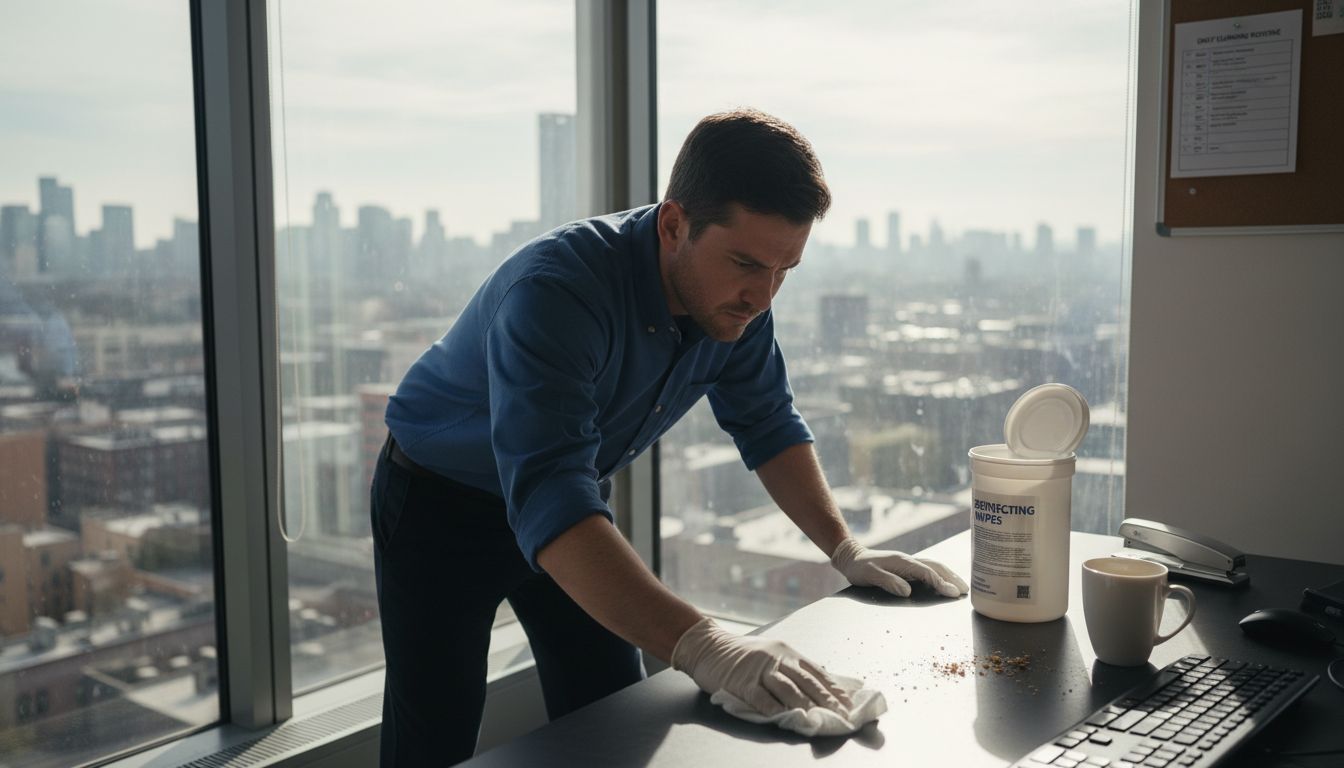
Most people consider cleaning to be a visual thing—floors look shiny, desks look neat, and trash is emptied—but the real impact goes far beyond appearances. The Role of Cleaning in Workplace Health—Impact. It is explained how regular, professional cleaning of office buildings has a direct effect on the health, attendance, and overall performance of employees. When cleaning is done right, it quietly supports the people who use the space every day. When it is done poorly, health issues tend to appear quickly.
Office environments are shared spaces, and that means germs, allergens, and poor air quality can spread quickly if surfaces and systems are not maintained properly. Sick days increase, productivity drops, and employees start to notice when cleaning feels inconsistent or rushed. Building managers and office leaders often fail to connect these problems to cleaning standards, despite the well-documented link.
This article explains how proper office building cleaning supports workplace health in practical, measurable ways. You will learn which areas matter most, how cleaning impacts indoor air quality and illness prevention, and what managers should look for when evaluating cleaning practices. The goal is to show why cleaning is not just a maintenance task but a critical part of creating a healthier, more reliable workplace.
The Real Cost of Cutting Corners on Office Building Cleaning
Here's something most property managers don't realize until it's too late: poor workplace hygiene costs you more than you think. Way more.
According to recent health and safety data, 1.7 million workers suffer from work-related illness, and many of these issues connect directly to workplace environment quality. That's not just a health problem; it's a bottom-line problem for you and your tenants.
Think about your typical office building in Santa Monica or Pasadena. You've got hundreds of people touching the same elevator buttons, using the same restrooms, and breathing the same recirculated air. Almost half of workers express concern about hygiene in shared office spaces, especially in common areas. When your tenants' employees start calling in sick more often, or worse, when they start looking for new jobs because the office feels grimy, that affects your occupancy rates.
One mid-sized tech company in El Segundo learned these facts the hard way last year. They switched to a cheaper cleaning service to save a few bucks. Within three months, employee sick days jumped 25%. The real kicker? Healthcare claims increased by 24% when proper cleaning protocols weren't maintained. They spent way more on temporary staff and lost productivity than they ever saved on janitorial services.
What Actually Happens When You Get Office Building Cleaning Right
Let's flip this around and talk about what good looks like.
Research shows companies with formal wellness programs that include hygiene components see measurable returns. We're talking about fewer sick days, better employee morale, and yes, real cost savings that show up in your tenants' quarterly reports.
But here's the thing: effective cleaning isn't just about having someone push a mop around after hours. It's about understanding which surfaces matter most, when they need attention, and what products actually work.
The High-Touch Zone Strategy
You've probably walked through your building a thousand times without thinking about it, but certain spots in your property are germ magnets. Door handles, elevator buttons, restroom fixtures, kitchen counters, and the coffee machine everyone crowds around at 9 AM. These are your high-touch zones.
Quality office cleaning services know these spots need attention multiple times per day, not just during the evening cleaning shift. That's where day porter services make a huge difference. They catch the mess before it becomes a problem.
A property manager we work with in West Hollywood put it this way: "Before we had day porters, our tenants complained about the state of the common areas by 2 PM. Now? The place looks fresh all day long. Tenant satisfaction scores went up 40%."
Air Quality: The Invisible Factor
Here's something you can't see, but your tenants definitely feel. Dust, allergens, and chemical residues circulate through HVAC systems, triggering respiratory issues. Regular carpet care, floor maintenance, and proper ventilation cleaning directly improve indoor air quality.
Poor air quality doesn't just make people sneeze. It makes them tired, irritable, and less productive. Then they start working from home more often because "the office air gives them headaches." Your tenants notice when their employees prefer working remotely, and they start questioning whether they need all that expensive office space.
The Hybrid Work Reality Changes Everything
With hybrid work models on the rise, employees rotating in and out of offices bring increased potential for germs to spread. This creates a new challenge for building managers.
On Monday mornings, your building might have 80% occupancy. Wednesday afternoons? Maybe 40%. Friday after lunch? Good luck finding anyone. But the germs don't know what day it is. Bacteria and viruses don't care about flexible work schedules.
This means your cleaning approach needs to be smarter, not just more frequent. You need protocols that account for fluctuating occupancy, deep cleaning strategies for shared workstations, and communication systems that keep your tenants informed about what's being done and when.
Real Talk About Shared Spaces
Conference rooms have emerged as the latest challenge in office building cleaning. Think about it: different people, different meetings, all day long. Someone comes in with a cold and touches the phone, the table, and the whiteboard markers. Two hours later, a different team uses that same room.
Recent surveys found that nearly 1 in 5 employees refuse to use office restrooms due to poor hygiene conditions. That's not a minor inconvenience. When people avoid using facilities, they're uncomfortable all day. Uncomfortable employees are distracted employees. Distracted employees make mistakes, miss deadlines, and eventually update their LinkedIn profiles.
The Green Cleaning Question Everyone's Asking
Your customers are asking about eco-friendly cleaning. Their employees are asking about it. Maybe you're wondering if it's just trendy marketing stuff or if it actually matters.
It matters, and not just for the reasons you might think.
Studies indicate that cleaning product usage increased by 74.2% during the pandemic, and health problems related to these products increased to 46.9%. Traditional cleaning chemicals, especially harsh disinfectants, can cause respiratory issues, skin irritation, and other health problems for building occupants and cleaning staff alike.
The green cleaning market is expected to reach $15 billion by 2025, driven by demand from companies that understand the connection between product safety and employee health.
Here's the practical angle: Eco-friendly cleaning products reduce toxic residues that affect indoor air quality. When your building smells like harsh chemicals every morning, people notice. When it smells clean but not chemical, they also notice. The second option wins every time.
Technology Is Changing How Office Building Cleaning Works
Organizations pioneering AI cleaning alongside IoT-based hygiene systems are finding success in a hygiene-focused market. But don't worry, robots aren't taking over (yet). We're talking about smart solutions that make human cleaners more effective.
For example, some janitorial services now use sensors that track restroom usage patterns. This data helps schedule cleaning based on actual traffic, not guesswork. The cleaning schedule adjusts accordingly if the third-floor restroom in your building experiences high traffic between 8 and 9 AM.
Additionally, quality cleaning companies utilize digital checklists and photo documentation. This isn't about micromanaging their staff. It's about accountability and proof. When a tenant calls to complain about something, you can check the system and see exactly when that area was last serviced and what was done.
The Training Gap Nobody Talks About
Many facilities lack proper training on how to use cleaning products correctly. This creates two problems: safety risks for cleaning staff and ineffective results for your building.
Disinfectants and cleaners are not the same thing. They require different application methods and different dwell times, and occasionally they shouldn't be used together at all. A professional cleaning service for office buildings trains its staff on these details. However, the weekend warrior, armed only with a bucket and a dream, lacks this training.
Building a Cleaning Strategy That Actually Works
You need a plan that makes sense for your specific building and tenant mix. A creative agency in West Hollywood has different needs than a law firm in downtown LA. Here's how to think through it:
Step 1: Assess Your Current Situation
Walk through your building at different times of day. Monday at 7 AM. Wednesday at 3 PM. Friday at 6 PM. What do you see? What do you smell? Be honest.
Ask your tenants what they notice. Send a quick survey. Most building managers skip this step because they're afraid of the complaints they'll get. But you can't fix what you don't know about.
Step 2: Identify Your High-Priority Areas
Not every space in your building needs the same level of attention. Rank areas by:
- Traffic volume (how many people use this space daily?)
- Touch frequency (how often do people interact with surfaces?)
- Tenant visibility (do important clients see this area?)
- Health risk level (restrooms rank higher than storage rooms)
Step 3: Match Services to Needs
Your lobby needs different care than your parking garage. Your executive suite needs different care than your mailroom. Professional janitorial services offer customizable plans that address these variations.
For most Los Angeles office buildings, this means:
- Daily evening cleaning for offices and common areas
- Multiple daily services for high-traffic restrooms
- Day porter coverage during business hours for lobbies and common spaces
- Weekly deep cleaning rotation for different areas
- Monthly specialty services like carpet deep cleaning or window washing
Step 4: Set Clear Standards and Expectations
This is where most building managers and cleaning companies fail. Vague instructions lead to disappointing results. "Keep it clean" means nothing. "All restroom fixtures are sanitized and dried, mirrors are streak-free, floors are mopped and dried, and supplies are restocked" means something.
Document everything. Take photos of what "done right" looks like. Share these standards with your cleaning provider and seek their input. They might see things you missed.
Step 5: Monitor Results and Adjust
Building cleanliness in 2025 reflects a company's core values and commitment to employee well-being. Your tenants judge you by how well you maintain common spaces. Set up regular inspection routines, not to nitpick but to catch issues before they become problems.
Monthly walk-throughs with your janitorial service manager keep everyone aligned. Quarterly reviews of tenant feedback help you spot trends. Annual assessment of your overall strategy ensures you're adapting to changing needs.
The Los Angeles Factor: What Makes Our Market Different
Running an office building in Los Angeles County comes with specific challenges that might not apply in other markets.
California has stricter environmental regulations than most states. The cleaning products and methods that work elsewhere might not meet our standards here. Professional office building cleaning companies operating in LA understand these requirements and stay current with regulation changes.
The weather also plays a role. We don't deal with snow and salt tracking, but we do deal with dry conditions that create dust problems, occasional heavy rain that brings mud and debris into buildings, and wildfire season smoke that affects indoor air quality.
Your tenants in Santa Monica might have different expectations than tenants in Pasadena. Westside companies tend to be more environmentally conscious and may specifically request green cleaning products. Downtown LA buildings with financial or legal tenants might prioritize appearance and first impressions above all else.
Cost vs. Value: Making the Smart Investment
Let's talk money because that's what it always comes down to.
Cheap cleaning services cost less up front. But they also cut corners, use inferior products, provide minimal training, and have high turnover, which means new people in your building all the time. These services fail because they cannot provide quality at rock-bottom prices.
Quality office building cleaning costs more per square foot, but it includes proper insurance coverage, background-checked and trained staff, professional-grade equipment and supplies, consistent scheduling and communication, and accountability when issues arise.
Companies that implemented proper cleaning programs saw healthcare claims drop by 24%. This real return positively impacts your tenants' financial performance, leading to greater tenant satisfaction and longer lease agreements.
Think about tenant retention. It costs a lot more to find new tenants than to keep the ones you have. If cleaning quality contributes to even one additional lease renewal, it more than pays for itself.
Making the Change: What Good Looks Like
Let's say you're ready to upgrade your cleaning program. What should you look for?
Cleaning companies that specialize in professional office buildings should offer you a detailed assessment before quoting anything. They should walk the property and ask about your current challenges, inquire about tenant feedback, and discuss your budget constraints. Anyone who gives you a price without seeing your building is guessing.
Seek companies with experience in your building type and size. A company that specializes in medical offices might not be the best fit for a creative agency building. Someone who cleans small buildings might struggle with a large multi-tenant property.
Check your references, but not just the ones they give you. Ask your building manager peers who they use. Check online reviews. Search for patterns in complaints. Every company receives occasional negative reviews, but it's the patterns that reveal the true picture.
About 45% of cleaning companies operate with fewer than 10 employees, which means many are small operations. Small can mean personal attention, but it can also mean no backup when their key person is sick. Make sure your provider has the capacity to maintain consistent service.
The Bottom Line on Workplace Health and Cleaning
Here's what it all comes down to: cleaning isn't a cost center that you minimize; it's an investment in your property's value and your tenants' success.
With healthcare sectors driving increased demand for professional cleaning services post-COVID, workplace hygiene remains vital to public health. The standards have changed permanently, and properties that adapt will outperform those that try to go back to 2019 cleaning levels.
Your role as a building manager includes providing a safe, healthy, productive environment. Office building cleaning is how you deliver on that responsibility. When you get it right, nobody notices. When you get it wrong, everybody notices.
The good news? You don't have to figure this out alone. Professional janitorial services that specialize in office buildings bring expertise, systems, and accountability that make your job easier.
Ready to Transform Your Building's Health Standards?
Your tenants expect more from their office environment than ever before. They're comparing notes with other companies. They're measuring sick days. They're surveying their employees about workplace satisfaction.
You can wait until a tenant threatens to leave over cleanliness issues, or you can get ahead of the curve now.
At MNZ Janitorial Services, we've spent years perfecting office building cleaning protocols specifically for Los Angeles County properties. We understand the unique challenges of buildings in West Hollywood, Santa Monica, El Segundo, and Pasadena. We train our teams on the latest health-focused cleaning techniques and utilize eco-friendly products to safeguard both your tenants and the environment.
We don't just clean your building; we partner with you to create a healthier workplace environment that attracts and retains quality tenants.
Want to see the difference professional office building cleaning makes? Let's talk about your property's specific needs and design a program that delivers measurable results.
Call MNZ Janitorial Services today at (818) 480-9316 or visit us for a free property assessment.
Transform your space into a clean and welcoming environment with MNZ. Contact us today to schedule a consultation and get a quote for our professional cleaning and maintenance services.
.jpg)


