
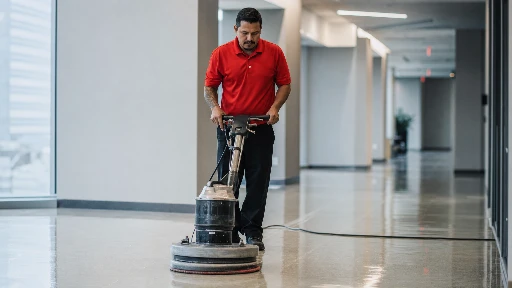
The cost to strip and wax a VCT floor in Los Angeles commercial buildings runs $0.30 to $0.65 per square foot for a standard strip-and-recoat cycle, according to BSCAI 2026 labor benchmarks. To strip and wax a 5,000 sq ft floor — stripped down to bare vinyl composition tile and refinished with four coats of wax — typically costs $1,500 to $3,250. For property managers overseeing Class A buildings, retail centers, medical offices, and multi-tenant commercial properties across Los Angeles, understanding what drives that range is the difference between a competitive bid and an expensive surprise.
What VCT Floor Stripping and Waxing Involves
Stripping versus buffing: two different services
Buffing and burnishing restore surface gloss on a finish that's still in reasonable shape. Stripping removes all existing finish layers — old wax, discolored coats of wax, embedded heel marks — down to the bare tile. These are two different services at two different price points. Many building managers confuse them, and some cleaning vendors let that confusion stand because buffing quotes are lower and easier to win. If your floor is showing yellowing, traffic pattern blackening, deep scuffs, or old wax buildup so thick the tile edges are losing definition, you need a strip and wax floor service — not a buff. Buffing will temporarily mask the problem and create thicker, more uneven buildup that costs more to strip later.
VCT (Vinyl Composition Tile) is a porous, dimensionally stable flooring material extremely common in Los Angeles commercial buildings — hallways, break rooms, medical office suites, retail service areas, and government facilities. Unlike LVT (Luxury Vinyl Tile) or polished concrete, VCT requires a floor finish to protect it. Without finish, VCT scuffs easily and stains permanently. The finish system — typically three to five coats of commercial acrylic floor wax — is the actual working surface. When it degrades, the floor looks terrible. When maintained well, vinyl composition tile can hold a high-gloss appearance for decades.
Step-by-step: how pros strip and wax floors
A pro crew strips and wax floors by first applying a chemical stripper to dissolve the old wax and finish buildup, agitating with a floor machine fitted with black stripping pads, then using a mop to rinse away loosened debris and grime from the tile surface. After neutralizing the tile to remove all stripper residue, the clean floor dries completely before new finish coats go down. A dedicated finish applicator lays down each coat of wax in even, overlapping passes. Most commercial facilities receive three to five coats of wax. High-gloss showroom or medical-grade floors may receive as many as seven coats on VCT that sees heavy foot traffic.
The job ends with a buff or burnish pass to develop gloss and remove applicator lines. Moving furniture, cubicle systems, or fixed equipment adds time and labor. Buildings with significant furniture throughout the space should expect moving furniture costs to appear as a line item — some vendors include it, others quote it separately.
What Does It Cost to Strip and Wax Floors in Los Angeles?
Floor condition and old wax buildup
A floor stripped and refinished six months ago requires far less chemical stripper and labor than one that hasn't been stripped in three years and has accumulated eight layers of old wax with embedded black heel marks throughout. Stripper dwell time, number of machine passes, and disposal of old wax and debris all scale with buildup depth. When requesting pricing, ask the vendor specifically whether they'll do a single-pass or multi-pass strip, and confirm they plan to neutralize the tile before applying new finish. Many corners get cut on the neutralization step, which causes new coats of wax to bond poorly and peel prematurely.
The condition of the floor also determines how many coats of wax can be applied effectively. A floor with significant grime, scratches, or discoloration from wear and tear may need additional prep time before any finish coats go down. Ask each contractor to note the condition of the floor in their written estimate so you have documentation of pre-existing issues and an agreed scope.
Building access and scheduling constraints
VCT stripping requires a wet floor for the duration of the process, which means the area must be vacated and cordoned off. For occupied commercial buildings in Los Angeles, this almost always means after-hours or weekend service, which carries a premium over standard daytime rates. Buildings with freight elevator restrictions, parking structure access limitations, or multi-tenant security requirements add complexity that vendors price into their labor estimate. A straightforward after-hours strip on an accessible ground-floor retail space quotes differently than the same square footage on the 18th floor of a Class A tower with elevator scheduling requirements.
Finish product quality and labor and materials costs
Commercial floor finish products range from economy-grade products that require frequent reapplication to high-solids formulations designed for durability and extended service life. High-performance finishes run 20 to 25% solids content per gallon, compared to economy products at below 18% solids. When comparing bids, ask each vendor to break out labor and materials separately so you can evaluate finish product quality alongside crew cost. The higher product cost is typically offset by reduced annual maintenance cycles. Ask your vendor what finish product they're proposing and look up the solids content.
Square footage and scope economies
Like most commercial cleaning services, VCT floor care pricing benefits significantly from scale. A 2,000 sq ft job has high setup cost relative to the work area. A 20,000 sq ft job spreads that fixed overhead across ten times the billable area. BSCAI's 2026 labor cost data pegs commercial cleaning labor at 50 to 65% of total service revenue, and floor care is labor-intensive, which means large jobs deliver substantially better per square foot pricing than small jobs. Portfolio pricing across multiple buildings typically runs 15 to 25% below individual-building rates.
How Often Does VCT Need to Be Stripped and Waxed?
Standard commercial maintenance schedules
Most commercial VCT floors in Los Angeles benefit from one to two full strip-and-recoat cycles per year, with interim spray buffing or burnishing every four to eight weeks to maintain gloss between strip cycles. High-traffic areas like lobbies, main corridors, and cafeteria dining areas may need more frequent maintenance. Low-traffic storage and mechanical spaces may only need an annual strip. The right schedule depends on your foot traffic count, the finish product used, and the regular clean-and-maintain program your janitorial team runs between strip cycles.
Facilities managers at Class A Los Angeles commercial properties typically run a quarterly maintenance program: strip and recoat in January and July, spray buff monthly, and spot-burnish as needed. This keeps the floor at a consistent visual grade without allowing wear and tear to accumulate to the point where remedial stripping becomes a larger cost. Well-maintained VCT floors are a durability story — the finish system protects the tile from grime and debris that would otherwise cause permanent staining.
Signs your floor needs a strip and wax (not just a buff)
Your floor needs a full strip when you see: significant yellowing across the tile field; black heel marks that don't respond to buff passes; visible edge buildup where multiple coats of wax have accumulated past the tile edge, including buildup along the baseboard line; a hazy appearance even immediately after burnishing; or evidence of finish delamination in high-traffic zones. Continuing to buff a floor that needs a strip is money spent on diminishing returns. Including floor stripping and waxing in your annual service agreement rather than treating it as a reactive fix produces more predictable maintenance costs.
Getting an Accurate Quote for Your Los Angeles Building
What information to have ready
To get an accurate VCT floor stripping and waxing quote, have the following ready: total square footage of VCT floor area by zone, a description of the current floor condition, the last time the floor was stripped (if known), access constraints and scheduling windows for after-hours work, and whether you want a one-time service or an annual maintenance agreement. Vendors who ask these questions before quoting are doing the job properly. Vendors who quote blind without seeing the floor or understanding the building's access requirements are likely to add surcharges after the job starts.
Comparing strip and wax floor bids
When comparing strip and wax floor bids, ask each contractor or cleaning company to specify: number of finish coats included, whether a neutralization step follows stripping, finish product name and solids content, labor and materials breakdown by crew size, whether moving furniture is included or quoted separately, and whether interim maintenance visits are included in any annual contract. A quote that specifies all of these elements is comparable to another quote that does the same. These are the preparation details that separate a pro job from a disappointing one.
At MNZ Commercial Cleaning Services, we've maintained VCT floors in Los Angeles commercial properties since 1979, across office buildings, retail centers, medical suites, and multi-tenant commercial campuses. We provide itemized strip-and-wax quotes that specify product, process, and crew, so you know exactly what you're getting before we start. Reach us at (818) 480-9316 or through our Los Angeles commercial cleaning services page to schedule a site assessment.
Frequently Asked Questions
How long does the floor need to dry before tenants can walk on it?
Each coat of commercial floor finish dries to the touch in 30 to 45 minutes under normal Los Angeles indoor conditions. With three to five coats of wax on a VCT floor, the full process requires 4 to 8 hours of cure time before the floor is ready for normal foot traffic. Never allow traffic onto a wet coat; foot traffic on a wet coat causes permanent marking that requires re-stripping to correct.
Can VCT floor stripping be done during business hours?
Technically yes, but practically almost never for occupied commercial buildings. The chemical stripper has a strong odor, the floor must remain wet and cordoned off during the process, and the machines are loud. Most Los Angeles commercial buildings schedule VCT service for Friday evenings through Sunday, or overnight service windows. Buildings with 24/7 operations sometimes work section by section across a rotating schedule, though this increases labor cost significantly because of the additional preparation and teardown involved.
What's the difference between waxing floors and applying floor finish?
Commercial floors don't actually use wax in the traditional sense. The term "waxing floors" is a holdover from the era of solvent-based products. Modern commercial floor finish is an acrylic polymer emulsion. When a contractor says they'll wax a floor, they're applying commercial acrylic floor finish — not a wax product. The number of coats of wax (typically three to five) determines gloss level and durability, even though those coats are acrylic. Waxing floors and applying floor finish mean the same thing in commercial practice today.
Does floor stripping damage VCT?
Properly executed stripping does not damage VCT. The stripper chemical is designed to dissolve the finish system, not the tile itself. Damage typically occurs when a vendor uses excessive chemical concentration, allows stripper to dwell too long on aged or brittle tile, or uses an aggressive pad that scratches the surface. With a qualified pro crew using the correct stripping formulation, VCT can be stripped and refinished many times over its service life without degradation. Vinyl composition tile stripped professionally can look clean and perform well for decades.
MNZ Commercial Cleaning Services provides VCT floor stripping, refinishing, and ongoing maintenance programs for property managers and facilities directors across Los Angeles. Call (818) 480-9316 or visit mnz.com for a no-obligation site assessment and itemized quote.
Related Reading
What Cleaning Standards Do Class A Office Tenants in Los Angeles Expect?
What Should a Commercial Cleaning SLA Include to Hold Your Vendor Accountable?
Transform your space into a clean and welcoming environment with MNZ. Contact us today to schedule a consultation and get a quote for our professional cleaning and maintenance services.
.jpg)


