
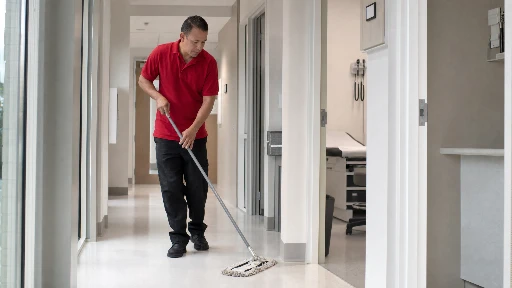
Medical and dental buildings in Los Angeles must follow cleaning and disinfection standards that go well beyond what standard commercial janitorial covers. OSHA's Bloodborne Pathogens Standard (29 CFR 1910.1030) requires any cleaning service working in a medical or dental facility to follow specific exposure control protocols, use EPA-registered disinfectants in regulated waste areas, and provide appropriate personal protective equipment to cleaning staff. According to the CDC Healthcare Infection Control Practices Advisory Committee (HICPAC) 2026 guidelines, healthcare-associated infections affect roughly 1 in 31 patients on any given day, and surface contamination is a key transmission vector. At MNZ Commercial Cleaning Services, we've served medical office buildings and dental practices across the Los Angeles region since 1979. The compliance requirements are real, and the consequences of getting them wrong range from failed state inspections to OSHA citations to patient safety incidents that no property manager wants to explain.
The Regulatory Framework for Medical Facility Cleaning in California
Before you can put a cleaning scope together for a medical or dental building, you need to understand which agencies have jurisdiction. Los Angeles medical and dental facilities answer to several overlapping regulatory bodies, and a cleaning vendor that doesn't know this framework isn't qualified for the work.
OSHA Bloodborne Pathogens Standard
The federal standard that matters most for cleaning staff is OSHA 29 CFR 1910.1030. It applies any time cleaning workers may contact blood or other potentially infectious materials (OPIM). That category includes used examination table paper, sharps containers, specimen transport surfaces, and any surface that has had contact with bodily fluids. The standard requires:
- A written Exposure Control Plan, updated at least annually and accessible to all employees
- Annual bloodborne pathogen training for any employee with reasonably anticipated exposure risk, completed before the first at-risk assignment
- Appropriate personal protective equipment — gloves, gowns, face shields — provided at no cost to employees and required whenever exposure risk exists
- Use of EPA-registered disinfectants in all areas with potential contact with blood or OPIM, with labeled contact times observed
- Hepatitis B vaccination offered to all employees with occupational exposure risk, at no cost
- Post-exposure evaluation and follow-up procedures for any needlestick, splash, or other exposure incident
- Proper labeling, containment, and transfer of regulated waste per California's Medical Waste Management Act
Any commercial cleaning company you hire for a medical or dental building should be able to show you their Exposure Control Plan and training records before the first shift. If they can't, that's a disqualifying gap.
California Department of Public Health Requirements
California layers state requirements on top of federal OSHA. The California Department of Public Health (CDPH) regulates medical waste disposal, and cleaning staff who handle medical waste in a California facility must follow the Medical Waste Management Act (Health and Safety Code 117600 et seq.). This affects how regulated waste bags are handled, labeled, stored, and transferred to a licensed medical waste hauler. Cleaning staff cannot simply throw regulated waste into general trash, and a cleaning vendor who does this creates direct liability for the building owner and medical tenant.
The CDPH also enforces environmental cleaning standards for licensed outpatient surgical centers and dialysis clinics, which are held to a higher standard than general medical offices. If your building houses any of these tenant types, the cleaning scope needs to reflect the higher requirement.
EPA-Registered Disinfectant Requirements
Not every disinfectant is appropriate for medical facility use. The EPA's List N disinfectants for emerging viral pathogens, along with EPA List E for norovirus and other hospital-grade pathogens, are the reference points for which products qualify. Contact time matters as much as product selection. A disinfectant that kills MRSA in 10 minutes only works if it stays wet on the surface for 10 minutes. Many general cleaning services spray and immediately wipe, which invalidates the efficacy claim. Your cleaning vendor should document which EPA-registered products they use in your facility, what the labeled contact time is, and how they verify the surface stays wet for that duration.
What Medical Building Cleaning Must Cover
Patient Areas, Exam Rooms, and High-Touch Surfaces
The standard for a medical exam room after each patient encounter is terminal cleaning of all contact surfaces: exam table (or exam table paper replaced and table wiped), blood pressure cuffs, otoscope handles, light switches, door handles, chair armrests, and any surface the patient or provider touched. Between-patient cleaning is not a full room deep clean, but it must hit all high-touch surfaces with an EPA-registered disinfectant at the correct contact time.
End-of-day cleaning goes further: floors mopped with a disinfectant solution, all waste removed, restroom and sink areas disinfected, and a wipe-down of all horizontal surfaces including supply cart tops, counter surfaces, and any shared equipment. Weekly deep cleaning adds tasks like cleaning under exam tables and equipment carts, disinfecting light fixtures and wall panels, and inspecting HVAC vents.
Restrooms and Waiting Areas
Medical office restrooms serve patients with compromised immune systems, active infections, and chronic conditions. They need twice-daily disinfection at minimum for a busy practice, with high-touch surfaces like door handles, flush handles, faucet handles, and soap dispensers hit at every service. Floors should be mopped with an EPA-registered hospital-grade disinfectant, not a general-purpose cleaner.
Waiting rooms are contamination collection points. Patients arrive sick and sit in chairs for extended periods, touching magazines (which should be removed entirely from waiting rooms per CDC guidance), armrests, and door handles. Daily disinfection of all waiting room surfaces, daily vacuuming of upholstered seating, and removal of any non-wipeable surface items is the standard that makes sense for a medical waiting area in 2026.
Pro tip: Ask your cleaning vendor to provide a daily cleaning checklist specific to each zone in your medical building, with initials and timestamps from the technician. That documentation protects you in a regulatory inspection and demonstrates to tenants that cleaning is happening on a defined schedule, not whenever the crew gets around to it.
Regulated Waste Handling
Cleaning staff working in medical buildings will encounter regulated waste: red biohazard bags, sharps containers nearing capacity, specimen waste. The correct protocol is to remove full regulated waste containers to the designated secure waste staging area, replacing them with a fresh container of the appropriate type. Cleaning staff must never compress, open, or transfer the contents of a regulated waste bag or sharps container. They must wear gloves and, where bags are torn or damaged, face protection. All regulated waste handling must be documented per the facility's Exposure Control Plan.
Dental Office Cleaning: Specific Standards That Differ from Medical
Dental operatories have cleaning requirements that go beyond general medical office standards, because the dental environment generates aerosols containing blood, saliva, and water from dental unit lines, creating a contamination zone around every chair.
Operatory Cleaning Between Patients
The standard between-patient operatory clean in a California dental office covers: replacement of all surface barriers (barrier wrap on light handles, bracket table, headrest, chair controls), disinfection of any surface not covered by a barrier, disinfection of the spittoon and evacuation system external surfaces, and replacement of patient bib and cup. This takes 10 to 15 minutes per operatory done correctly, which is why dental practices need to build cleaning time into their scheduling rather than expecting cleaning staff to work around an already-full appointment book.
Sterilization Room and Instrument Area Protocols
The dental sterilization room has its own cleaning standard. Countertops and work surfaces must be disinfected at the start and end of each clinical day. Autoclave exteriors and seams must be wiped with an appropriate disinfectant. The sink and ultrasonic cleaner area need disinfection at the end of the day. Cleaning staff working in the sterilization room should be trained specifically on dental practice infection control, because the consequences of contaminating sterilized instrument pouches or sterile storage zones are direct patient safety risks.
Surface Barriers and Disposable Materials
Many dental practices use surface barriers, the plastic wrap or adhesive covers applied to high-touch operatory surfaces, as their primary infection control method during patient care. Cleaning staff must know not to remove barriers before the provider has verified the operatory is ready for cleaning, and not to disturb barrier integrity during other cleaning tasks. When barriers are removed post-patient, they go directly into the waste stream, and the underlying surface is wiped with a disinfectant before new barriers are applied. This is clinical infection control, not general office cleaning, and a vendor that doesn't understand the distinction should not be working in a dental office.
How to Choose a Cleaning Vendor for a Medical or Dental Building in LA
What Certification to Look For
There is no single nationally standardized certification for medical cleaning, but meaningful indicators exist. The ISSA's Cleaning Industry Management Standard (CIMS) certification with a healthcare component covers written programs, training documentation, and quality control systems. The GBAC STAR Facility Accreditation program from the Global Biorisk Advisory Council covers outbreak prevention, response, and recovery preparedness, which is relevant to medical and dental facilities post-2020. Beyond certifications, ask for the vendor's written Exposure Control Plan, their training records for bloodborne pathogen compliance, and a list of EPA-registered products they use for regulated-waste-area disinfection.
What to Include in the Scope of Work
A compliant scope of work for a medical or dental building in Los Angeles should specify: which EPA-registered disinfectants will be used and their contact times, how regulated waste will be handled, the training documentation required for cleaning staff working in the facility, the frequency for each cleaning zone, and escalation procedures for spills involving blood or OPIM. The scope should also specify that cleaning staff will not touch or alter any medical equipment, sharps containers, or specimen materials, and that any incident involving a potential exposure will be reported immediately per the Exposure Control Plan.
For multi-tenant medical buildings, the scope needs to address common-area cleaning standards separately from individual suite scopes, since a general contractor janitorial company typically handles common areas while individual medical tenants may contract separately for their suites.
Frequently Asked Questions
Does OSHA require cleaning staff to have bloodborne pathogen training?
Yes. OSHA 29 CFR 1910.1030 requires that all employees with reasonably anticipated contact with blood or OPIM receive bloodborne pathogen training before any exposure-risk assignment, and annually thereafter. Training must cover the Exposure Control Plan, transmission routes, personal protective equipment, and post-exposure procedures. A cleaning vendor that cannot provide training records for their staff assigned to your medical facility is out of compliance with federal law before they start their first shift.
What disinfectants are approved for medical office cleaning in California?
California does not maintain a separate disinfectant approval list distinct from the EPA's. The relevant EPA lists are List N (emerging viral pathogens including SARS-CoV-2), List E (Clostridioides difficile), and hospital-grade disinfectants on EPA's registered products database. For medical offices, an EPA-registered hospital-grade disinfectant with demonstrated efficacy against MRSA, VRE, and norovirus is the baseline. Contact time per the product label must be observed. Check that the product is appropriate for the surface type: some disinfectants damage upholstery, vinyl, or painted surfaces with repeated use.
Can a general commercial cleaning company service a dental office?
Not without additional training and protocols. A general commercial cleaning company can handle dental office common areas, but operatory cleaning and sterilization-room cleaning require specific infection control training, knowledge of surface barrier protocols, and compliance with OSHA's Bloodborne Pathogens Standard. If a general cleaning company agrees to clean a dental operatory without demonstrating these capabilities, both the company and the dental practice take on regulatory and liability exposure. Ask for bloodborne pathogen training records and an Exposure Control Plan before signing any agreement.
How often should a medical office waiting room be deep cleaned?
Daily disinfection of all contact surfaces and floors is the minimum for an active medical waiting room. A deeper clean, covering upholstery shampooing or replacement, HVAC vent cleaning, window and baseboard cleaning, and any fabric or soft-surface cleaning, should happen monthly for practices with high patient volume. Quarterly, a full room reset clean covering ceiling tiles, light fixtures, and wall surfaces keeps the space at a standard that holds up to regulatory review.
MNZ Commercial Cleaning Services has worked with medical office buildings and dental facilities across the Los Angeles region since 1979. Our cleaning staff receive bloodborne pathogen training, we use EPA-registered hospital-grade disinfectants, and our scope-of-work process is built around what California regulatory compliance actually requires. For a quote on your medical building or dental practice, call (818) 480-9316 or visit mnz.com/contact.
Related Reading
When Does a Multi-Tenant Building Need Electrostatic Disinfection?
What Should a Commercial Cleaning SLA Include to Hold Your Vendor Accountable?
How to Write a Commercial Cleaning RFP for Los Angeles Properties (With a Bid Comparison Scorecard)
What Cleaning Standards Do Class A Office Tenants in Los Angeles Expect?
Transform your space into a clean and welcoming environment with MNZ. Contact us today to schedule a consultation and get a quote for our professional cleaning and maintenance services.
.jpg)


