
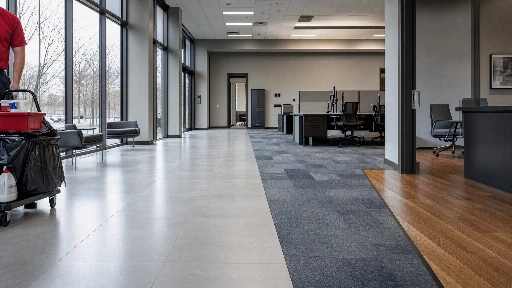
The flooring in a Class A Los Angeles office building is one of the most visible indicators of how a property is managed. Tenants walk across it every day. Visitors form their first impressions from the lobby up. And unlike painted walls or light fixtures, floor surfaces are in direct contact with foot traffic, spills, and the specific grime that LA's environment delivers: fine dust from wildfire seasons, tracked-in particulate from construction zones, and the daily wear of high-occupancy commercial use. At MNZ Commercial Cleaning Services, we've been providing commercial floor care and cleaning services to office buildings across the greater Los Angeles area since 1979, and a well-run flooring maintenance program is one of the clearest ways to protect your asset and keep your floors looking their best for tenants and visitors alike.
Why Commercial Floor Care Is a Property-Management Priority in Los Angeles
Floor maintenance isn't optional maintenance. It's the visible proof of your building's daily operations. The International Institute of Inspection, Cleaning and Restoration Certification (IICRC) and the National Wood Flooring Association (NWFA) both publish maintenance standards that define what proper floor care looks like, and commercial leases often reference these standards in the definitions of ordinary maintenance obligations. If your carpet looks matted and gray at six months, your tile grout is darkened, or your hardwood is showing surface scratches from neglected upkeep, tenants notice before they say anything.
Los Angeles adds specific wear factors that other markets don't see at the same rate. Wildfire ash and fine particulate tracked inside from parking structures and building entries acts as an abrasive on hard surface floors, accelerating finish wear. High occupancy buildings with multiple tenant suites moving through common areas see constant foot traffic on entries, elevator lobbies, and corridors. And the region's low humidity in summer months can cause hardwood flooring to contract and gap if moisture management is ignored. A commercial flooring maintenance program designed for average national conditions usually runs behind what LA properties actually need. Downtown LA, Westside, and mid-Wilshire buildings all face the same challenge: keeping floors clean in a market where the environment works against you year-round.
Carpet Maintenance Programs for Commercial Office Buildings
Commercial carpet in a Los Angeles office building requires a layered maintenance approach. Day-to-day vacuuming is the foundation, but it only removes surface-level dry soil. The soil that causes long-term degradation is oily particulate that bonds to carpet fiber and isn't removed by standard vacuum passes. Without periodic extraction, this embedded dirt acts as an abrasive against fiber backing, causing premature matting and graying that no amount of vacuuming corrects.
Hot Water Extraction and Interim Carpet Cleaning
Hot water extraction, often called steam cleaning though it doesn't use steam, is the IICRC-recommended method for restorative carpet cleaning in commercial settings. For high-traffic areas like lobbies, elevator banks, and main corridors, extraction every six to twelve months is standard practice for Class A buildings. For lower-traffic tenant suite interiors, every twelve to eighteen months is a practical cadence if interim cleaning is part of the program.
Interim carpet cleaning methods, including encapsulation and bonnet cleaning, are faster and less disruptive than extraction. Encapsulation cleaning applies a polymer crystal solution that encapsulates soil particles and dries them so they can be vacuumed out during regular service. It doesn't deliver the depth of clean that extraction does, but it extends the time between extraction cycles and keeps high-traffic carpet looking presentable between deep cleans. For a multi-floor Class A building, a combination of scheduled encapsulation cleaning and periodic extraction gives you the best value without the cost of extraction on every floor every cycle. These cleaning methods are complementary, not interchangeable, and a good commercial carpet cleaning service uses the right one for the conditions present.
Carpet Protection and Spot Treatment
Commercial carpet tiles and broadloom in office settings benefit from periodic application of carpet protector after each extraction clean. Protector treatment reduces soiling rate by creating a barrier against oily particulate, and it makes spot treatment easier because spills are less likely to wick into fiber backing before they can be addressed. Document your carpet protector applications in your building's maintenance log. BOMA's property management standards reference this kind of documented maintenance program as evidence of proper stewardship in building certification reviews.
Spot treatment protocols matter more than most property managers realize. Coffee spills, food, and tracked-in grease from parking structures are all common in occupied office buildings. A stain addressed within hours rarely becomes a permanent problem. The same stain left overnight, or addressed with the wrong cleaning solutions, can set permanently or damage the fiber. Make sure your day porter team has access to appropriate carpet spotting agents and knows how to use them without overwetting the carpet.
Hardwood and Wood Floor Care for Commercial Office Spaces
Hardwood flooring appears in high-end Class A office lobbies, executive suites, conference rooms, and tenant build-outs throughout Los Angeles. It's a premium surface that adds perceived value, but it requires a maintenance program that protects the finish without over-waxing, overwetting, or using the wrong chemistry. The NWFA's commercial maintenance guidelines define what proper wood floor care looks like, and following them protects both the floor's appearance and its warranty.
Daily and Interim Wood Floor Maintenance
Daily sweeping and dust mopping with a microfiber pad is the baseline for commercial hardwood care. Dry soil and grit left on a wood floor's surface act as abrasives under foot traffic, wearing the finish faster than normal use would. A properly executed dust mop pass picks up the fine particulate before it works into the finish. Avoid wet mops for daily maintenance. Excess moisture is the primary cause of hardwood flooring problems in commercial settings, including cupping, warping, and finish clouding.
Periodic damp mopping with a properly diluted, pH-neutral commercial floor cleaner formulated for hardwood is appropriate for interim maintenance when the floor shows visible soiling. The key word is damp, not wet. A mop head wrung to near-dryness leaves enough moisture to clean without saturating the wood. For busy entry areas and lobbies, a damp mop cycle weekly or every two weeks is practical. For lower-traffic conference rooms, monthly is generally adequate. Your cleaning team should never use multi-surface cleaners, oil soaps, or ammonia-based products on hardwood floors, as these leave residue that dulls the finish or degrades the protective coating over time.
Wood Floor Refinishing and Recoat Programs
Screen-and-recoat programs apply a fresh topcoat to an existing hardwood floor without sanding down to bare wood. They're appropriate when the finish is worn or showing light scratches but the floor itself is structurally sound. For high-traffic commercial areas, a recoat cycle every two to three years maintains the finish before it wears through to bare wood, which requires full sanding and refinishing at significantly higher cost. Full sanding and refinishing is appropriate when the finish has worn through, when the floor has deep scratches or staining that recoating won't address, or when the floor's species and condition supports it.
Preventive maintenance matters here. Entry mats at building entrances, elevator lobbies, and high-traffic transition points trap grit before it reaches the wood surface. Felt pads on furniture legs reduce scratching in conference rooms and private offices. These measures extend the time between refinishing cycles and reduce the total cost of floor ownership over a lease term.
Tile, VCT, Grout, and LVT Floor Care Programs
Tile floors, including ceramic, porcelain, and natural stone, are common in Los Angeles office building lobbies, restrooms, break rooms, and building common areas. Commercial flooring in tenant build-outs includes vinyl composition tile and luxury vinyl tile across different types of flooring. Each surface type has specific chemistry requirements, and getting the cleaning methods right is the difference between floors that look maintained and floors that look like nobody is watching them.
VCT Floor Stripping, Waxing, and Buffing
Vinyl composition tile is one of the most common types of flooring in Los Angeles office service areas, corridors, and lower-cost build-outs. VCT requires a stripping and waxing program to stay looking professional. Over time, old wax and buildup accumulate on VCT surfaces, trapping dirt deep within the layers and turning the floor a dull, gray-brown regardless of how often it's mopped. A professional floor stripping service removes old wax and buildup down to the bare tile, and then applies fresh floor finish in multiple coats to restore the shine and provide a protective surface against daily foot traffic.
After stripping and waxing, high-speed buffing maintains the floor finish between full strip-and-wax cycles. Buffing with a rotary machine polishes the existing finish and removes light scuffs, keeping the floor looking clean between scheduled floor waxing cycles. For VCT in high-traffic corridors and entries, a buff cycle every one to three months extends the time before the next full strip and re-wax is needed. This three-stage program, strip, wax, and buff, is standard commercial floor care practice and is what your janitorial cleaning service should be delivering on a documented schedule.
Commercial Tile Cleaning and Grout Maintenance
The tile surface itself is generally durable and easy to maintain with daily damp mopping using a neutral cleaner. Grout is the maintenance challenge. Porous grout lines trap soil, oils, and bacteria, and they discolor faster than the tile surface around them. Routine mopping doesn't reach grout effectively. Without periodic machine scrubbing, grout in high-traffic areas darkens to a gray or black that's difficult to distinguish from mold. Tenants notice dark grout, especially in restrooms and break rooms.
Rotary floor machine scrubbing with a grout brush or appropriate pad, combined with an alkaline cleaner appropriate for the tile type, is the standard method for periodic grout cleaning. For restrooms and break rooms in an occupied building, quarterly machine scrubbing is a practical standard. For lobby and corridor tile in a high-traffic property, semi-annual or annual scrubbing maintains grout appearance without excessive cost. After a thorough scrub, grout sealing extends the protection by reducing the rate at which soil penetrates the grout surface and making daily cleaning more effective. Tile and grout cleaning is a specialized care service that requires professional equipment and proper chemistry, not just a more vigorous mop pass.
Natural stone flooring, including marble, limestone, and travertine, requires chemistry that's specifically pH-neutral, because acidic or alkaline cleaners etch stone surfaces permanently. Never use standard tile cleaners on natural stone without confirming the product is stone-safe. Diamond pad polishing and stone restoration are specialized services that restore the gloss and luster to etched or worn stone surfaces, typically every one to three years depending on traffic. A professional polish brings back the natural appearance that daily maintenance can't fully preserve on its own.
LVT and Vinyl Floor Care
Luxury vinyl tile and plank flooring has become standard in commercial office build-outs because of its cost and durability profile. It's more forgiving than hardwood or tile when it comes to cleaning chemistry, but it still has specific requirements. Most LVT floors carry a no-wax factory finish, which means floor wax and traditional floor finish programs are inappropriate. Applying traditional floor finish over no-wax LVT creates a cloudy buildup that dulls the appearance and requires stripping to correct.
Daily damp mopping with a neutral cleaner and periodic machine scrubbing is the correct program for LVT. Floor finish programs that include stripping and waxing cycles are appropriate only for VCT, the older, more porous commercial vinyl product. If your building has a mix of VCT and LVT, make sure your floor care program identifies each flooring type correctly and uses the right cleaning methods for each. Your day porter team and your commercial cleaning service both need to know the difference.
How Often Should You Schedule Commercial Floor Care Services in a Los Angeles Office Building?
Cleaning frequency depends on floor surface type, traffic volume, tenant occupancy, and the building's proximity to LA's specific air quality challenges. These floor care maintenance services should follow a documented schedule tailored to each surface type. Here's a practical cadence for the main types of flooring in a Class A Los Angeles office building.
For carpet: daily vacuuming in common areas, encapsulation or interim cleaning quarterly in high-traffic zones, hot water extraction every six to twelve months in heavy-traffic areas and every twelve to eighteen months in lower-traffic interiors. For hardwood: daily dust mopping, damp mopping as needed weekly to monthly depending on traffic, screen-and-recoat every two to three years. For tile and grout: daily damp mopping, quarterly machine scrubbing in restrooms and break rooms, annual scrubbing and grout sealing in lobby and corridor areas. For VCT: strip and re-wax every twelve to eighteen months in high-traffic zones, buff every one to three months depending on traffic volume. For LVT: daily damp mopping, periodic machine scrubbing quarterly or semi-annually in high-use areas.
After a wildfire event with sustained poor air quality, schedule a thorough carpet extraction and hard surface scrub before returning occupants to normal operations. The deep cleaning process removes fine particulate from wildfire smoke that has settled into carpet fiber and sits on hard surface finishes—standard daily cleaning cycles don't reach it.
How Much Does Commercial Floor Care Cost in a Los Angeles Office Building?
Commercial floor care pricing depends on surface type, square footage, frequency, and scope of service. Here are rough budget ranges for Los Angeles Class A buildings.
Carpet hot water extraction typically runs $0.15 to $0.35 per square foot depending on soil level and machine type. Encapsulation interim cleaning runs $0.08 to $0.18 per square foot. Carpet protector application adds $0.05 to $0.12 per square foot. Hardwood screen-and-recoat runs $1.50 to $3.50 per square foot depending on the number of coats and condition of the floor. Full hardwood sanding and refinishing runs $3.00 to $6.00 per square foot or more depending on wood species and condition. VCT strip and wax runs $0.20 to $0.45 per square foot depending on soil level and number of finish coats. Buffing service runs $0.05 to $0.15 per square foot. Tile machine scrubbing with grout cleaning runs $0.20 to $0.50 per square foot. Grout sealing adds $0.15 to $0.35 per square foot. Natural stone polishing and restoration runs $1.00 to $4.00 per square foot depending on the stone type and scope of restoration.
Day porter floor care, including daily vacuuming and damp mopping, is typically included in the base janitorial service rate rather than priced per square foot. The way to frame the cost of a floor care program for ownership isn't as a cleaning cost. It's as a capital preservation strategy. A professional floor care program can restore your floors from years of accumulated wear and extend surface life significantly—at a fraction of replacement cost. A carpet that's properly maintained lasts seven to ten years in a commercial setting. A neglected carpet in the same traffic may need replacement in three to four years. The difference in replacement cost almost always exceeds the total cost of the maintenance program that prevented it. The same holds for VCT: a floor that's properly stripped and waxed on schedule costs far less to maintain than one where old wax buildup has ground into the tile and requires restoration.
Frequently Asked Questions
How do you tell if commercial carpet needs extraction or just interim cleaning?
Look at the carpet in a raking light at a low angle. Matted, gray-looking fiber that doesn't recover when you rub it is a sign that oily soil has bonded deep within the fiber and interim cleaning won't address it. Extraction is needed. Carpet that still has visible texture and normal color, but looks dull or shows traffic patterns, is a good candidate for encapsulation or interim cleaning as a maintenance step between extraction cycles. If the carpet last had extraction more than eighteen months ago in a high-traffic area, schedule extraction regardless of appearance, because soil accumulates past what's visible before the floor looks obviously dirty.
Can commercial hardwood floors in a Los Angeles office be refinished without shutting down the floor?
Screen-and-recoat programs can often be staged floor by floor or zone by zone to minimize disruption to occupied tenants. A full sand-and-refinish requires more drying time and produces more dust and fumes, and typically needs a weekend or an off-hours schedule for each zone. Water-based finishes dry faster and off-gas less than oil-based finishes, making them a better fit for occupied buildings. Coordinate with your facilities team and your tenants before scheduling any refinishing work so occupants aren't accessing the floor during cure time.
What causes grout to turn black in a commercial restroom even with regular cleaning?
Porous grout lines trap soil and organic matter that a mop can't fully extract. Over time, that trapped material supports mold and mildew growth, which is what causes the dark discoloration that looks like embedded dirt but doesn't clean out with standard mopping. Quarterly machine scrubbing with an appropriate alkaline cleaner reaches the grout surface effectively. After a thorough scrub, applying a penetrating grout sealer significantly slows the resoiling rate by reducing grout porosity. Standard floor mops don't produce enough agitation to clean grout. Professional equipment and machine scrubbing are required.
Who handles floor care in a commercial office lease: landlord or tenant?
This depends entirely on your lease structure. Full-service gross leases typically assign janitorial and floor maintenance to the landlord or property management company as part of the building's operating expenses. NNN and modified gross leases often push floor care responsibility for the tenant's demised premises to the tenant, while common areas remain the landlord's responsibility. Check the maintenance exhibit and the definitions section of your lease carefully. If the lease is silent on floor care specifically, commercial cleaning standards typically assign it to whoever is responsible for general janitorial maintenance. Confirm with your facilities attorney before assuming either party's obligation, especially if you're managing a multi-tenant building where maintenance obligations vary by suite.
MNZ Commercial Cleaning Services has maintained commercial flooring across Los Angeles since 1979, working with Class A office buildings from Santa Monica and Culver City to downtown LA, Sherman Oaks, and the Westside. Our commercial floor care maintenance services combine day porter surface maintenance with scheduled deep cleaning cycles tailored to each type of flooring in your building, including commercial carpet cleaning service, VCT strip and wax programs, hardwood maintenance, and tile and grout cleaning. We build customized cleaning plans around your building's specific floor types, traffic patterns, and tenant needs. Call us at (818) 480-9316 or reach us through mnz.com to get a free estimate for a comprehensive floor care program for your property.
Related Reading
How to Set Up a Green Cleaning Program for a LEED-Certified Office in Los Angeles
Transform your space into a clean and welcoming environment with MNZ. Contact us today to schedule a consultation and get a quote for our professional cleaning and maintenance services.


