
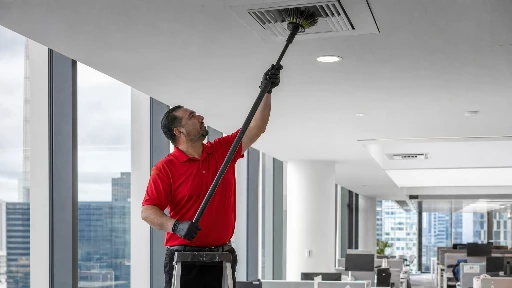
Commercial HVAC systems in Los Angeles office buildings carry a hidden burden that most property managers don't see until it becomes a tenant complaint: according to the EPA, indoor air can be two to five times more polluted than the outdoor air right outside the building, and neglected duct interiors are a primary reason why. The National Air Duct Cleaners Association (NADCA) recommends commercial air duct cleaning every three to five years, but LA's wildfire seasons, near-constant construction activity, and high dust load make annual inspection and cleaning cycles the practical standard for Class A buildings with occupied floors. At MNZ Commercial Cleaning Services, we've been providing professional air duct cleaning services to commercial buildings across the greater Los Angeles area since 1979, and the difference between a maintained heating and air conditioning system and a neglected one shows up in tenant comfort, filtration costs, and lease renewal conversations.
Why HVAC and Vent Maintenance Is a Property-Management Priority in Los Angeles
Indoor air quality isn't a soft amenity. It's a measurable factor in tenant productivity, occupant health, and building operating costs. The EPA estimates that poor indoor air quality costs U.S. businesses tens of billions of dollars annually in lost productivity, increased absenteeism, and liability exposure. For Class A buildings competing on tenant retention in Los Angeles County, that's a metric you can't afford to ignore. Your tenants deserve cleaner air, and a maintained duct system is how you deliver it.
How Los Angeles's Environment Affects Commercial HVAC Systems
Los Angeles presents a specific air quality challenge that buildings in other markets don't face at the same intensity. Seasonal wildfire events deposit fine particulate matter and ash that bypass standard MERV 8 filters and coat duct interiors with a residue that smells even after the outdoor air clears. Year-round construction activity, especially near Westside, DTLA, and Hollywood corridors, pushes construction dust into building air intakes. And the region's general smog load means the components of your HVAC system are working against dirtier baseline air than buildings in cleaner markets.
The result: filters clog faster, coils accumulate debris faster, and duct contamination builds up faster than the national average. If your HVAC maintenance schedule is based on national averages and not on LA conditions, you're running behind. Restricted airflow from dirty ducts affects every floor of your building.
The Link Between Air Quality and Tenant Satisfaction
Tenants in Class A Los Angeles buildings notice air quality even when they can't name what's wrong. A dusty odor at HVAC startup, visible debris near supply registers, or humidity imbalances that make the office feel stuffy are all symptoms of a system that hasn't been properly serviced. These complaints rarely come with an explicit "I think your HVAC ducts are dirty." They come as general dissatisfaction calls about the building's condition.
ASHRAE Standard 62.1, the ventilation standard for acceptable indoor air quality in commercial buildings, establishes minimum outdoor air requirements that your HVAC system is designed to deliver. A duct system clogged with dirt and dust can't deliver the airflow the system was designed for, which means you're potentially out of compliance with the standard your building was permitted to meet, even if the mechanical equipment itself is functional.
What Commercial HVAC and Vent Cleaning Services Actually Include
When a commercial HVAC cleaning vendor says they "clean the ducts," the scope can vary enormously. A professional job on a Class A building is a multi-component service, not a one-technician-with-a-vacuum visit. Here's what complete air duct cleaning services cover for commercial properties in Los Angeles.
Air Duct and Supply/Return Register Cleaning
The core of any commercial air duct cleaning service is mechanical agitation and extraction of debris from the HVAC duct interior. For commercial buildings, this means connecting a truck-mounted or portable negative-air vacuum to the duct system to create a continuous suction, then using rotary brush equipment to break contaminants loose from duct interiors and draw them into the collection system. Supply registers, return grilles, and diffusers are removed, brushed, and vacuumed before reinstallation. Professional duct cleaning requires specialized tools and equipment that day porters and general cleaning crews don't carry.
A legitimate commercial air duct cleaning company will follow the NADCA ACR standard, which defines what "clean" means for duct systems and gives you an inspection protocol to verify results. The National Air Duct Cleaners Association developed this code of ethics and standard precisely because the scope of air duct cleaning services varies so widely between vendors. Ask your vendor whether they follow NADCA standards before signing a contract. If they don't know what ACR stands for, that tells you something.
Coil Cleaning and Drain Pan Service
Evaporator coils are one of the highest-impact components of your HVAC system. When coil fins are clogged with dust, bio-film, or particulate debris, the system loses heat-transfer efficiency, which translates directly to higher electricity consumption. According to ASHRAE research, dirty coils can reduce heat transfer efficiency by 20 to 30 percent, adding significantly to monthly utility bills. A building at 100,000 square feet can lose thousands of dollars a year to inefficient coil operation.
Drain pans beneath evaporator coils are a common source of mold growth and odor. When condensate doesn't drain properly, standing water accumulates, and mold colonizes the pan and sometimes the nearby duct interior. A professional cleaning service treats the drain pan with an EPA-registered antimicrobial product and clears the condensate drain line during every cleaning cycle. Clean air starts with clean coils and dry drain pans.
Air Handler and Blower Component Cleaning
The air handler cabinet, blower wheel, and blower motor housing accumulate debris that affects both airflow and noise levels. A dirty blower wheel can cause vibration and noise complaints from tenants on the floor directly below mechanical rooms. Professional duct cleaning of the blower assembly is part of a complete HVAC vent cleaning service and should be verified in the scope of work before the job starts.
Dryer Vent Cleaning and Exhaust Duct Service
In commercial buildings with break rooms, laundry facilities, or kitchen exhaust systems, dryer vent cleaning is a separate but equally important service. Lint buildup inside dryer ducts is a recognized fire hazard, and commercial dryer duct cleaning is often required under building insurance policies. Dryer vents that aren't cleaned regularly accumulate lint and debris that restrict airflow and create heat buildup. Most professional HVAC duct cleaning services in Los Angeles include dryer vent cleaning as an add-on to the primary service, and scheduling both in the same visit minimizes building disruption and technician access time.
Pro tip: Schedule HVAC vent cleaning to coincide with your filter replacement cycle, and document both in your building's maintenance log. Insurance carriers and property certifying bodies like BOMA accept documented HVAC maintenance programs as evidence of proper building stewardship. That documentation can matter during a claims review or a building certification renewal.
How Often Should You Schedule HVAC Duct Cleaning for a Los Angeles Office Building?
The right cadence depends on your building's occupancy, location, construction activity nearby, and post-wildfire event history. NADCA's baseline of every three to five years applies to buildings in average conditions. Class A Los Angeles office buildings typically don't meet that definition. Serving Los Angeles since 1979, we've developed cleaning schedules tailored to the region's specific air quality challenges.
Standard Cadence for Most Class A Los Angeles Buildings
For occupied Class A office buildings in Los Angeles, a practical cadence looks like this: full duct cleaning and coil cleaning every two to three years, annual filter upgrades to MERV 13 or higher, semi-annual drain pan treatment, and quarterly inspection of supply registers and return grilles for visible contamination. If your building is near an active construction zone, adjust to annual commercial duct cleaning until the construction concludes.
After any wildfire event where air quality index readings exceeded 150 (hazardous range) for more than three consecutive days, schedule an inspection and coil cleaning before returning occupants to normal operations. Fine particulate matter from wildfire smoke is small enough to penetrate standard filters and coat coil surfaces with a layer that standard cleaning cycles won't address.
When to Clean More Frequently
Several conditions trigger more frequent cleaning beyond a standard schedule. Visible dust accumulation on supply registers within six months of cleaning means your filter system is inadequate for the building's conditions. Recurring musty or dusty odors at HVAC startup point to duct interior contamination or drain pan mold. A spike in tenant complaints about allergy symptoms or dry air after a building renovation often traces to construction debris that entered the duct system during the project. And any water intrusion event, whether from a roof leak, pipe burst, or flooding, requires immediate HVAC inspection and treatment before microbial growth has time to establish.
How Much Does Commercial Air Duct Cleaning Cost in a Los Angeles Office Building?
Commercial HVAC duct cleaning is priced by system complexity, linear footage of ductwork, number of AHUs, and scope of coil and drain pan service. For a Class A office building in Los Angeles County, you can expect rough budget ranges as follows: a single-floor air handler unit with associated ductwork typically runs $800 to $1,500 for thorough duct cleaning services; a full multi-floor system with multiple AHUs generally runs $3,000 to $8,000 or more depending on building size and duct configuration.
Coil cleaning is sometimes priced separately. Budget $150 to $400 per coil for evaporator cleaning, depending on coil size and accessibility. Drain pan treatment and condensate line clearing is usually included with coil service or priced at $50 to $100 per unit. Dryer vent cleaning in commercial settings typically runs $75 to $200 per unit depending on duct length and access.
The most important cost comparison isn't between HVAC cleaning vendors. It's between the cost of professional air duct cleaning services and the cost of not cleaning. A 20 to 30 percent coil efficiency loss on a building-sized HVAC system adds up to more than the cleaning cost within a single year for most Class A properties. Framing HVAC duct cleaning as a utility cost reduction strategy, rather than a maintenance cost, often changes how ownership views the line item.
Frequently Asked Questions
How do I know if my commercial HVAC system needs cleaning?
The most visible signs are dusty buildup around supply registers, visible debris on diffuser blades, a dusty or musty odor at HVAC startup, and tenant complaints about air quality or respiratory irritation. Less obvious signs include rising utility bills without corresponding occupancy increases, reduced airflow from some registers compared to others, and condensate drain pan odors. Schedule a professional inspection if you haven't had a formal air duct cleaning in three or more years, or following any wildfire event with sustained hazardous air quality readings.
Can HVAC cleaning help with wildfire smoke residue in a Los Angeles office?
Yes, and it's often necessary after a major wildfire event. Fine particulate matter from wildfire smoke deposits on evaporator coil surfaces and inside duct walls, and standard filter changes don't remove that residue. A professional coil cleaning and duct inspection after a significant wildfire event removes the trapped particulate and the odor compounds that go with it. If your building runs continuously through a wildfire smoke event, schedule an inspection before the next extended occupied cycle rather than waiting for complaints.
Who is responsible for commercial HVAC duct cleaning in a leased office building?
This depends on your lease structure. Gross leases with full-service provisions generally put HVAC maintenance responsibility on the landlord or property management company. Modified gross or NNN leases may push HVAC maintenance costs to the tenant for individual floor units. Read the maintenance exhibit in your lease carefully. If the lease is silent on HVAC cleaning specifically, commercial cleaning standards typically assign it to the party responsible for general mechanical maintenance, which is usually the building owner in a Class A property. Confirm this with your facilities attorney before assuming either party's obligation.
Should my day porter be cleaning HVAC vents during regular service visits?
Day porters can handle surface-level vent cleaning: wiping dust from the face of supply registers and return grilles as part of regular maintenance rounds. What they can't do is clean inside the duct system or service coils and drain pans, which require specialized tools and equipment and NADCA-trained technicians. Think of day porter HVAC maintenance as the visible surface layer, and professional commercial air duct cleaning services as the deep-system work that your day porter's routine can't replicate. The two are complementary, not interchangeable.
MNZ Commercial Cleaning Services has served commercial building owners and property managers across Los Angeles since 1979, with decades of experience maintaining Class A properties from Santa Monica and Culver City to Sherman Oaks and DTLA. We coordinate with mechanical contractors for full-scope HVAC and vent cleaning programs, and our janitorial teams handle the ongoing surface maintenance that extends the time between professional cleaning cycles. Call us at (818) 480-9316 or reach us through mnz.com to get a free estimate for a customized indoor air quality program for your building portfolio.
Related Reading
How to Clean a Commercial Building After Wildfire Smoke and Ash in Los Angeles
How to Set Up a Green Cleaning Program for a LEED-Certified Office in Los Angeles
Transform your space into a clean and welcoming environment with MNZ. Contact us today to schedule a consultation and get a quote for our professional cleaning and maintenance services.


