Common areas are the hardest part of a Class A office building to keep consistently clean, because they're used all day but often scheduled last. A 2026 BSCAI facilities management survey found that 68% of commercial tenants ranked lobby, corridor, and elevator cleanliness as the primary factor in their perception of overall building quality, rating it above interior suite cleaning. Your common areas are the first thing every tenant, visitor, and prospective client judges. Here's what a complete common area cleaning program looks like for a Class A building in Los Angeles.
What Counts as a Common Area in a Class A Building
Property managers and cleaning vendors sometimes mean different things when they say "common areas." A complete cleaning and maintenance program for shared spaces starts with a precise space inventory, so every area has a documented owner and cleaning frequency. Missing even one zone creates accountability gaps that surface as tenant complaints.
The full list for a typical Class A Los Angeles office building includes: main lobby and entry vestibule, elevator cabs and floor landings, primary and secondary corridors, shared restrooms on common floors, fitness center and locker rooms, bike room and package delivery area, stairwells, rooftop decks and outdoor amenity spaces, parking structure levels, underground garage elevator lobbies, mail rooms, conference floor foyers, and building management offices.
Main Lobby and Entry Zones
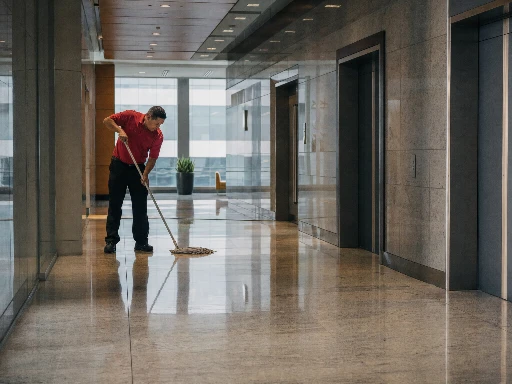
Your main lobby sets the first impression for every tenant, visitor, and prospective client who walks through the door. Daily tasks include floor care (polished concrete, marble, terrazzo, or stone depending on your spec), glass entry doors and sidelights, security desk surfaces, signage, and any seating or lounge furniture. High-traffic lobbies in Downtown Los Angeles, Santa Monica, West Hollywood, or Century City often need a day porter to maintain standards during business hours, not just after-hours cleaning. For a detailed protocol on maintaining high-traffic entry areas, see our guide on high-traffic lobby cleaning for LA office buildings.
Elevator Cabs and Landings
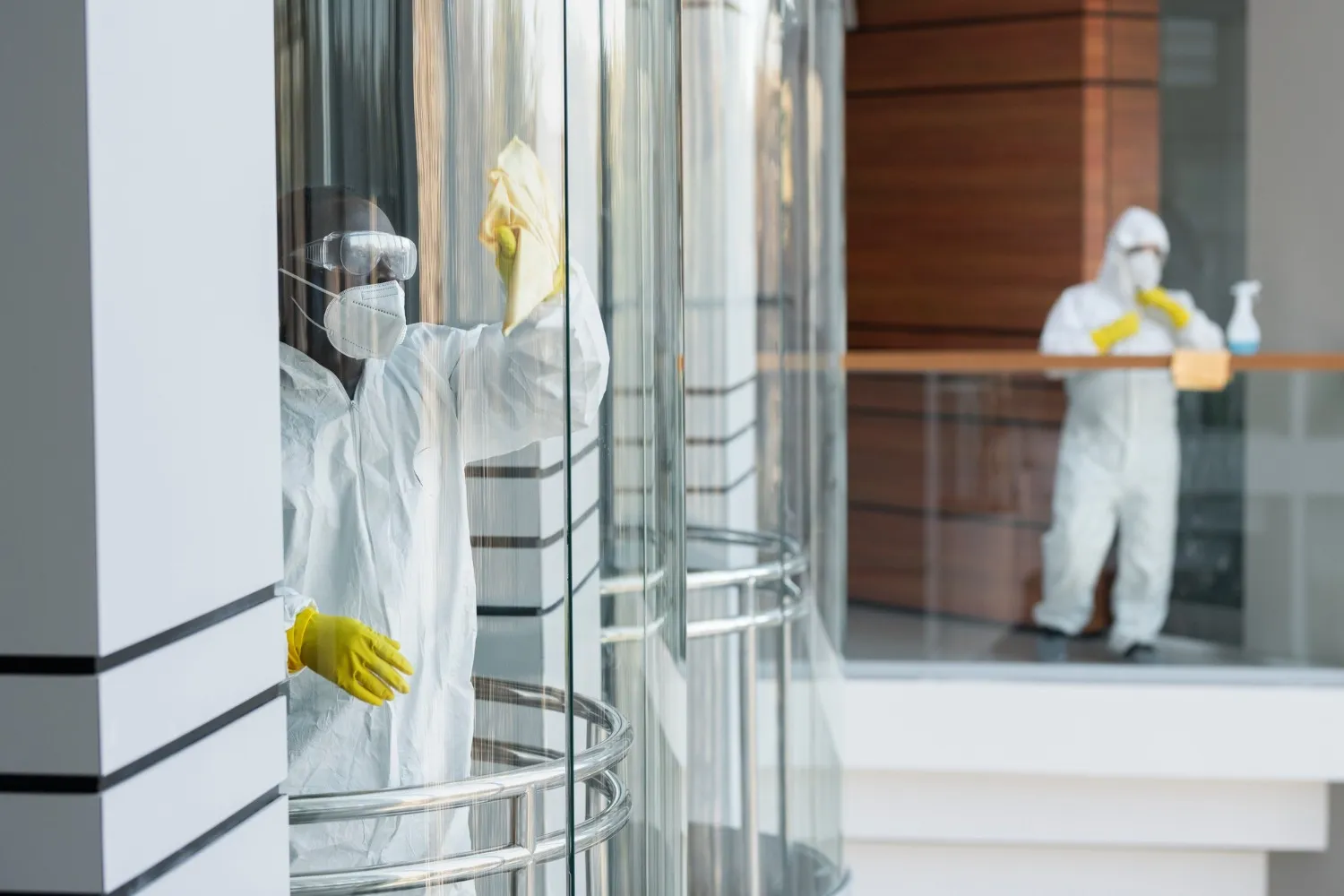
Elevator cabs are among the highest-touch surfaces in any commercial building. Button panels, handrails, thresholds, and stainless steel door panels need daily disinfection with EPA-registered products, not just periodic wiping. Elevator landings on each floor need daily vacuuming or mopping depending on your flooring type, plus floor track cleaning to prevent debris buildup that damages the equipment over time.
For Class A properties with polished stainless steel or wood-panel elevator interiors, the cleaning method matters as much as the frequency. Steel panels require lint-free microfiber cloths and pH-neutral cleaning solutions to avoid streaking. Wood panels require dry or barely damp application with furniture-grade products. Make sure your scope of work specifies materials and methods, not just "wipe down elevator cabs."
Corridors and Hallways
Floor-to-ceiling glass corridor walls, accent lighting, and designer floor finishes are common in newer Class A buildings across Playa Vista, Century City, and the Westside. These surfaces require cleaning protocols that match the material spec. A standard hallway mop program can damage a polished concrete floor or a specialty wall finish if the chemical pH isn't matched to the surface. Your cleaning provider should identify each floor surface type and material before your contract starts and document the correct product and method for each zone.
Property managers who research their cleaning provider's material experience before the contract starts avoid the most common floor-finish damage claims. Reputable commercial cleaning services will document approved cleaning solutions and application methods for each surface type as part of your onboarding process.
Corridor frequency depends on occupancy patterns. Buildings with all-day tenant traffic need morning and evening corridor passes. Lower-density floors can go to a single nightly pass. Document frequency by floor or zone, not as a single blanket specification for the whole building.
Amenity Spaces With Specialized Requirements
Modern Class A buildings in Los Angeles increasingly compete on amenities. Fitness centers, outdoor decks, and EV charging areas all require cleaning protocols that go well beyond standard office cleaning service.
Fitness Centers and Locker Rooms
Fitness centers are the most complaint-sensitive area of any Class A amenity program. Equipment surfaces need EPA-registered disinfectants applied with appropriate contact time, not just a spray-and-wipe with whatever solution is on the cart. Mats, benches, and locker room surfaces require daily disinfection. Locker room floors, showers, and drain areas need fungal and bacterial prevention protocols, not just daily mopping.
OSHA 29 CFR 1910.141 sets minimum sanitation requirements for locker rooms and sanitary facilities accessible to employees. For a Class A building with amenity-focused tenants, exceeding those minimums is the expectation, not meeting them. Fitness center cleaning typically needs a mid-day pass in addition to morning and evening service, especially in buildings with high lunchtime gym usage.
Bike Rooms and EV Charging Areas
Bike rooms are often overlooked in cleaning scopes until a tenant complaint forces the issue. Regular sweeping, floor degreasing (bike chains and tires leave oil and rubber residue), and periodic hose-down service are the basics. EV charging areas need surface wipe-downs, cord management cleaning, and pavement sweeping around charging stations to prevent cumulative debris buildup that accelerates surface wear.
Rooftop Decks and Outdoor Amenity Areas
Los Angeles buildings with rooftop terraces or outdoor tenant amenity areas need a separate outdoor protocol. Wind deposits debris constantly; bird droppings are a persistent issue on any elevated outdoor surface; and furniture, BBQ fixtures, and planters require specific care. Frequency depends on usage, but most occupied rooftop decks at Class A buildings need at minimum a Monday morning full-clean to address weekend accumulation, plus a Friday afternoon reset before weekend events.
Pro tip: For outdoor amenity areas, schedule a quarterly deep clean that includes furniture frames, drain clearing, pressure washing of pavement or tile surfaces, and planter care. Building this into the contract from the start costs far less than a reactive deep clean after a tenant complaint or before a prospective tenant walkthrough.
Parking Structure and Underground Levels
Parking structures accumulate oil, tire rubber, exhaust residue, and fluid drips in ways that standard cleaning equipment can't address. A Class A common area program should include monthly or bi-monthly pressure washing of parking deck surfaces, elevator lobby daily service, stairwell sweeping and mopping with drain clearing where applicable, and periodic line-marking maintenance to keep the structure looking well managed.
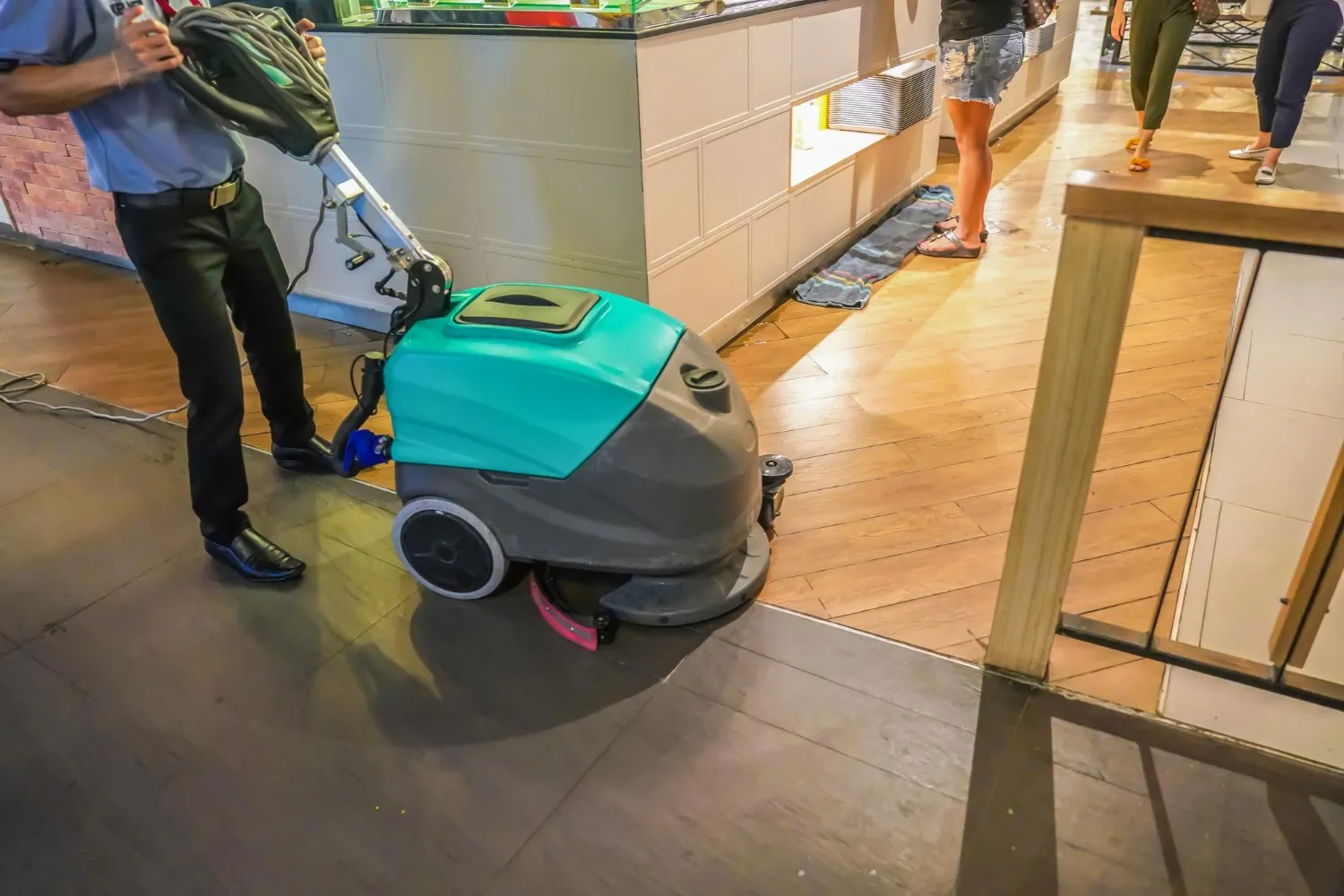
Parking structure cleaning for high-rise towers in Los Angeles often requires specialized equipment, including electric scrubbers and wet-dry vacuum systems that meet Cal/OSHA requirements for enclosed-space ventilation. Green cleaning solutions that comply with South Coast AQMD standards are required for enclosed parking structures in Los Angeles County. Verify that your cleaning provider has both the right equipment and compliant cleaning solutions for your garage configuration before signing the contract. For building exterior cleaning that includes parking areas, see our guide on commercial pressure washing costs for Los Angeles buildings.
Building a Cleaning Frequency Schedule by Zone
A common mistake is applying one cleaning frequency to the entire building. Class A properties need zone-based frequency schedules that reflect actual traffic patterns. Here's a framework that works well for a Los Angeles Class A tower:
Daily (every service night): Main lobby, all elevator cabs and landings, ground-floor restrooms, building management office, package and mail room, high-traffic corridor floors, fitness center equipment surfaces.
Three times per week: Upper-floor corridors, tenant-floor elevator landings, stairwell ground-floor landings, bike room floor and surfaces.
Weekly: Rooftop deck (Monday morning), stairwells full sweep and mop, EV charging area pavement, lobby furniture and upholstery spot cleaning.
Monthly: Parking garage scrub, outdoor furniture deep clean, window cleaning on common floors, light fixture dusting throughout common areas.
Quarterly: Full rooftop deck deep clean including furniture frames and drain clearing, upholstery cleaning in lobby seating, HVAC vent cleaning in common corridors and elevator lobbies. For HVAC and vent cleaning protocols, see our guide on commercial HVAC vent cleaning for Los Angeles office buildings.
Document this schedule in the service agreement, zone by zone. Verbal commitments to "clean everything" are unenforceable when tenant complaints arrive.
Day Porter Coverage vs. After-Hours Cleaning
Most Class A buildings in Los Angeles need both, not one or the other. After-hours cleaning handles the bulk of common area service: floor care, elevator wiping, lobby reset, and restroom service. Buildings with all-day lobby traffic, active conference center programs, or amenity-heavy setups need day porter coverage to maintain standards between the morning opening and the evening cleaning crew's arrival.
A day porter typically handles: lobby spot cleaning and glass touch-ups throughout the day, conference room restrooms between meetings, elevator cab interior wipe-downs at midday, and restroom supply restocking during business hours. For a complete breakdown of day porter responsibilities and how to structure coverage for your building type, see our guide on day porter services for Class A Los Angeles office buildings.
For restroom sanitation protocols specifically, including Class A-grade frequency standards and documentation requirements, see our guide on restroom sanitation protocols for Class A LA office buildings.
Frequently Asked Questions
Who is responsible for cleaning common areas in a multi-tenant Los Angeles office building?
The building owner or property manager is typically responsible for cleaning shared common areas: lobbies, corridors, parking structures, elevators, and amenities that all tenants access. Individual tenant suites are usually covered under a separate scope, often included in the building's cleaning contract or managed directly by the tenant. CAM charges billed to tenants typically include the allocated cost of common area janitorial services. Confirm the exact scope your lease covers before assuming your cleaning provider is handling a specific area.
How often should elevator cabs be cleaned in a Class A Los Angeles building?
Every night at minimum, as part of the after-hours cleaning program. Buildings with heavy daytime traffic or food delivery activity should add a midday spot-check by a day porter. Button panels need EPA-registered disinfectant applied daily. Stainless steel interiors need streak-free maintenance with appropriate microfiber and pH-neutral cleaning solutions to avoid surface damage over time. Cab flooring should be swept and mopped daily, with detail cleaning of floor tracks weekly.
What's the difference between common area cleaning and janitorial services?
Janitorial services typically refers to the full-scope cleaning program for a building, including both tenant spaces and common areas. Common area cleaning is a subset: the shared spaces that all tenants access but no single tenant controls. On most Class A property contracts, both are covered under one vendor agreement, but they may be quoted separately, especially in large multi-building portfolios where different service providers cover tenant-only versus common-area-only scopes.
How much does common area cleaning cost per square foot in Los Angeles?
For standard common area service, most Class A Los Angeles buildings fall in the $0.12 to $0.18 per square foot range per service visit (ISSA 2026 benchmarks). Specialized spaces, such as rooftop decks, parking structures, and fitness centers, are typically quoted separately. Buildings with day porter coverage add a daily rate billed per shift or per hour. Request a zone-by-zone quote rather than a blended per-square-foot rate so you can verify exactly what's included in each number.
MNZ Commercial Cleaning Services is a reputable building maintenance services provider with Class A common area programs across Los Angeles since 1979. We use sustainable cleaning solutions and EPA-registered products across all common area zones, and our professional janitorial services teams are trained on material-specific protocols for the finish types common in Class A Los Angeles office buildings. We're licensed, bonded, insured, and BBB accredited. Reliable cleaning and consistent quality are what property managers across Downtown Los Angeles, Santa Monica, West Hollywood, Culver City, El Segundo, and the Westside have come to expect from our team. Call us at (818) 480-9316 or visit our commercial janitorial services page to request a site assessment and proposal.
Related Reading
How Do You Keep a High-Traffic Building Lobby and Entry Area Clean in a Los Angeles Office?
How Do You Manage Day Porter Services in a Class A Los Angeles Office Building?
Transform your space into a clean and welcoming environment with MNZ. Contact us today to schedule a consultation and get a quote for our professional cleaning and maintenance services.